
Poultry Farming Business
Start a poultry farm at the scale that matches your land and capital, from a small broiler unit using an existing shed to a commercial broiler or layer farm with dedicated housing, equipment, biosecurity and working capital.
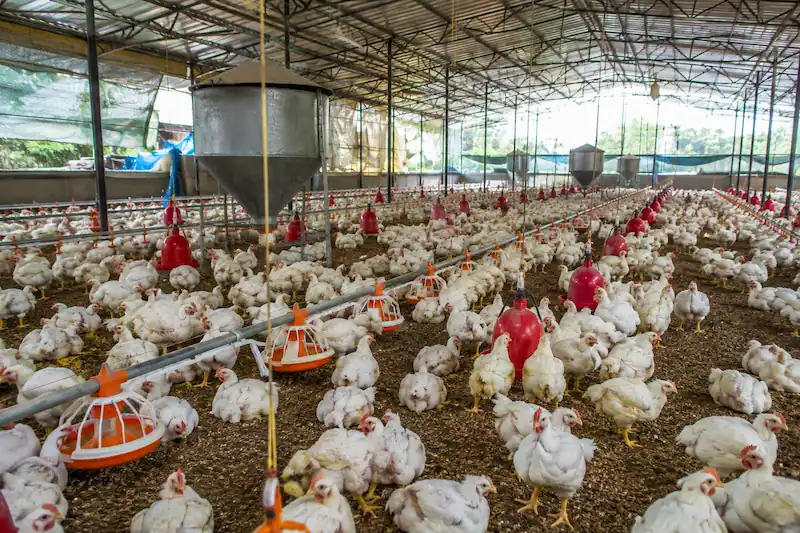
1. Market Demand & Business Viability
2. Itemized Startup Cost Breakdown
Every line item is audited against verified vendor quotes and realistic fit-out averages.
| Cost Head & Item | Min (₹) | Typical (₹) | Max (₹) | Allocation Notes |
|---|---|---|---|---|
| Machinery & Equipment | ||||
|
Existing Shed Repair and Biosecurity Setup
|
₹5,000 | ₹25,000 | ₹1,00,000 | 1.00 setup • Lowest-cost model assumes a suitable existing shed. Includes cleaning, repairs, entry control, mesh, sanitation points and basic water arrangements. |
|
Small Broiler Shed Construction
|
₹25,000 | ₹75,000 | ₹2,55,000 | 1.00 shed • A new 1,000-bird deep-litter shed is benchmarked by NABARD 2025-26 at about ₹2.55 lakh. Smaller farms using an existing shed can avoid most of this capital cost. |
|
Feeders, Drinkers and Brooding Equipment
|
₹5,000 | ₹20,000 | ₹1,00,000 | 1.00 set • Includes chick feeders, drinkers, brooder and basic flock equipment. NABARD benchmark for 1,000 broilers allocates ₹16,000 to equipment. |
|
Ventilation and Cooling Equipment
|
₹3,000 | ₹15,000 | ₹2,00,000 | 1.00 set • Fans, curtains and climate-control equipment. Requirement depends on shed type, bird count and local climate. |
|
Automatic Poultry Feeding and Drinking System
|
₹50,000 | ₹2,50,000 | ₹10,00,000 | 1.00 system • Relevant mainly for larger commercial houses. The 15,000-bird environmentally controlled NABARD benchmark allocates ₹24 lakh for total equipment rather than just feeding and drinking. |
|
Poultry Backup Generator
|
₹0 | ₹1,00,000 | ₹4,50,000 | 1.00 unit • Particularly important in environmentally controlled houses where ventilation and cooling depend on continuous electricity. NABARD uses ₹4.50 lakh in its 15,000-bird benchmark. |
|
Commercial Poultry House and Environmental Equipment
|
₹5,00,000 | ₹15,00,000 | ₹50,00,000 | 1.00 package • For large commercial farms. NABARD 2025-26 estimates ₹62.07 lakh total project cost for its 15,000-bird environmentally controlled contract model, including ₹30.60 lakh shed and ₹24 lakh equipment. |
| Interior Setup & Furnishing | ||||
|
Electrical, Water Storage and Farm Utility Installation
|
₹5,000 | ₹50,000 | ₹2,00,000 | 1.00 setup • Includes water tank, pump, plumbing, electrical protection and wiring. Larger environmentally controlled farms require substantially more utility infrastructure. |
| Licensing & Registrations | ||||
|
Local Permissions, Documentation and Registration Budget
|
₹1,000 | ₹10,000 | ₹50,000 | 1.00 package • Requirements vary by state, local body, farm scale, land use and activity. Verify applicable local permissions before construction. |
| Initial Raw Materials & Inventory | ||||
|
Day-Old Broiler Chicks
|
₹35,000 | ₹40,000 | ₹50,000 | 1000.00 birds • NABARD 2025-26 uses ₹35 per day-old chick for a 1,000-bird broiler farm. Recent Karnataka market references have indicated around ₹37 per chick, showing current regional variation. |
|
Broiler Feed for One Production Cycle
|
₹70,000 | ₹95,000 | ₹1,40,000 | 1.00 cycle • TNAU data reports about 2.51 kg cumulative feed per bird by 42 days in its dataset. Feed price varies by stage and formulation. NABARD uses ₹35/kg as its 2025-26 planning assumption. |
|
Litter, Vaccination, Medicines and Biosecurity Consumables
|
₹5,000 | ₹15,000 | ₹50,000 | 1.00 cycle • Includes litter material, disinfectants, vaccination and medicines under veterinary guidance and basic protective supplies. |
|
Emergency Working Capital Buffer
|
₹10,000 | ₹50,000 | ₹2,50,000 | 1.00 buffer • Provides liquidity for unexpected feed-price increases, mortality, veterinary emergencies, electricity or delayed bird payment. |
| Total Setup Investment | ₹7,14,000 | ₹22,45,000 | ₹78,45,000 | |
3. Plant Machinery & Equipment Catalog
| Machine / Tool Asset | Required Qty | Estimated Unit Price | Commercial Specs & Power |
|---|---|---|---|
| Automatic Poultry Feeding and Drinking System | 1 system | ₹2,50,000 | For larger commercial houses where automation reduces manual labour |
| Commercial Broiler Feeders and Drinkers | 1 set | ₹10,000 | Basic feeding and watering equipment for the flock |
| Commercial Poultry Backup Generator | 1 unit | ₹2,50,000 | Recommended where controlled housing depends on continuous electrical power |
| Poultry Brooder and Chick Heating System | 1 set | ₹8,000 | Required for chick brooding |
| Poultry Farm Biosecurity and Disinfection Equipment | 1 set | ₹15,000 | Biosecurity and disinfection support |
| Poultry Ventilation and Cooling Fan System | 1 system | ₹25,000 | Ventilation and heat-stress management |
4. Space, Power & Utilities
Minimum required footprint for machinery layout, raw material inventory storage, and dispatch.
Commercial power load with dedicated sub-meter and industrial earthing connection.
Adequate municipal utility inlet and local commercial/industrial zoning compliance.
5. Monthly Operating Expenses (OPEX)
Recurring operational commitments required every month to sustain full production.
| Expense Category & Head | Min / Mo | Typical / Mo | Max / Mo | Operational Notes |
|---|---|---|---|---|
| Land or Shed Rent Commercial Rent | ₹0 | ₹10,000 | ₹50,000 | Owned premises can eliminate rent. Rural commercial rents vary by location. |
| Electricity and Water Staff Salaries & Wages | ₹500 | ₹5,000 | ₹30,000 | Includes fans, pumps, lighting, brooders and other electrical loads. Environmentally controlled houses consume more power. |
| Farm Labour and Supervision Electricity & Commercial Utilities | ₹0 | ₹15,000 | ₹75,000 | Owner-managed micro farms can have minimal separate labour cost. Larger farms require attendants and supervision. |
| Transport and Local Logistics Monthly Raw Materials | ₹1,000 | ₹5,000 | ₹25,000 | Transport of chicks, feed, medicines and finished birds or eggs. |
| Litter and Sanitation Consumables Packaging Materials | ₹1,000 | ₹5,000 | ₹20,000 | Litter replacement, disinfectants, cleaning agents and protective materials. |
| Veterinary and Health Management Logistics & Delivery | ₹1,000 | ₹5,000 | ₹30,000 | Veterinary visits, vaccination, medicine and flock-health management. Contract farming can shift some inputs to the integrator. |
| Equipment and Shed Maintenance Logistics & Delivery | ₹500 | ₹3,000 | ₹20,000 | Maintenance of feeders, drinkers, fans, brooders, wiring and shed structures. |
| Insurance and Miscellaneous Logistics & Delivery | ₹500 | ₹3,000 | ₹15,000 | Insurance and miscellaneous farm operating expenses where applicable. |
| Total Monthly Overheads | ₹4,500 | ₹51,000 | ₹2,65,000 |
6. Revenue Model, Profit Margin & Break-Even
Fixed monthly overheads (₹51,000) are 100% covered at 1,656 kg live broiler sold/month. Estimated capital payback timeline: 0 months.
7. Licences, Registrations & Compliance
Udyam MSME Registration
Free online government registration. Required to access bank priority lending, PMEGP subsidies, and delayed payment dispute resolution.
GST Registration
Mandatory if annual turnover exceeds ₹40 Lakhs (goods) or ₹20 Lakhs (services). Enables input tax credit on commercial machinery purchases.
Shop & Commercial Establishment Licence
Issued by local municipal corporation / panchayat authority for commercial premises operation and labor compliance.
Commercial Bank Current Account
Dedicated current account under business legal entity name along with trade PAN and UPI merchant QR.
8. Operational Skills Required
Brooding, feeding, watering, ventilation, litter management, vaccination scheduling, biosecurity, mortality monitoring, body-weight tracking, FCR tracking, record keeping and basic farm economics.
9. Customer Acquisition Strategy
Small farms should develop relationships with local poultry traders, live-bird buyers, meat retailers and contract integrators. Layer farms can supply egg wholesalers, retailers, hotels, bakeries and institutions. Larger farms can negotiate directly with integrators, processors, organised retailers and institutional buyers. Before placing chicks, verify expected selling price, payment terms, transport distance and mortality assumptions.
10. Interactive Profit & Expense Simulator
Adjust customer ticket sizes, daily footfall, and fixed overheads to see real-time net returns.
Adjust Financial Assumptions
Slide or type direct valuesSimulation Output
Mathematical Precision11. Founder Profile Suitability
Highly Recommended If:
Suitable for rural and semi-urban entrepreneurs, agricultural land owners, family farms, contract growers, independent poultry farmers, women-led enterprises and established agribusiness operators. Best suited to people who can provide daily supervision, reliable water and electricity, biosecurity and access to a dependable bird or egg market.
Not Ideal If:
Not ideal for entrepreneurs who cannot supervise the flock daily, have unreliable water or electricity, cannot maintain biosecurity, lack veterinary support or are planning solely around optimistic live-bird prices.
12. Operational Risks & Mitigation Strategy
Major risks include disease outbreak, mortality, heat stress, poor ventilation, contaminated water, weak biosecurity, feed-price increases, chick-quality problems, live-bird price declines, delayed payments, theft and equipment failure. DAHD guidance emphasises access control, appropriate farm location, structural and operational biosecurity and continuous health monitoring. Use appropriate stocking density, reliable chick sources, clean water, controlled visitor access, rodent and wild-bird control, sanitation, vaccination under veterinary guidance and accurate flock records.
13. Step-by-Step 90-Day Launch Plan
Feasibility & Premises Lease
Finalize commercial space lease agreement, verify power load capacity, and apply for Udyam MSME certification.
Machinery Procurement & Fit-Out
Order plant machinery, complete electrical/plumbing fit-out, and setup commercial bank current account.
Trial Runs, Hiring & Licences
Install and calibrate equipment, conduct staff SOP training, and secure local municipal trade licenses.
Soft Launch & Marketing Kickoff
Initiate neighborhood promotional campaigns, setup Google Business listing, and commence commercial operations.
14. Similar Business Opportunities
Explore audited business blueprints in related sectors & investment ranges.
Mushroom Farming
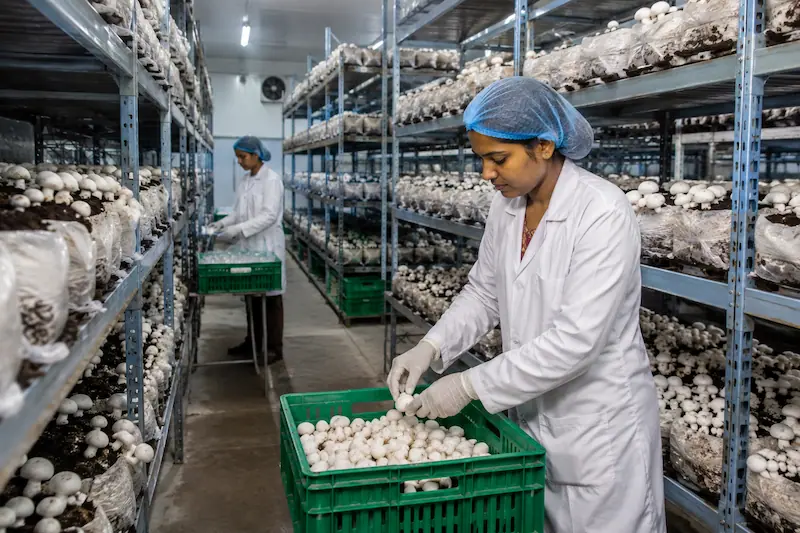
Start a commercial oyster mushroom farm using controlled indoor rooms, low-cost agricultural residues and staggered production for regular weekly harvesting. The strongest model combines local retail sales with repeat B2B supply to restaurants, hotels, retailers and institutional buyers.
Makhana Processing Business
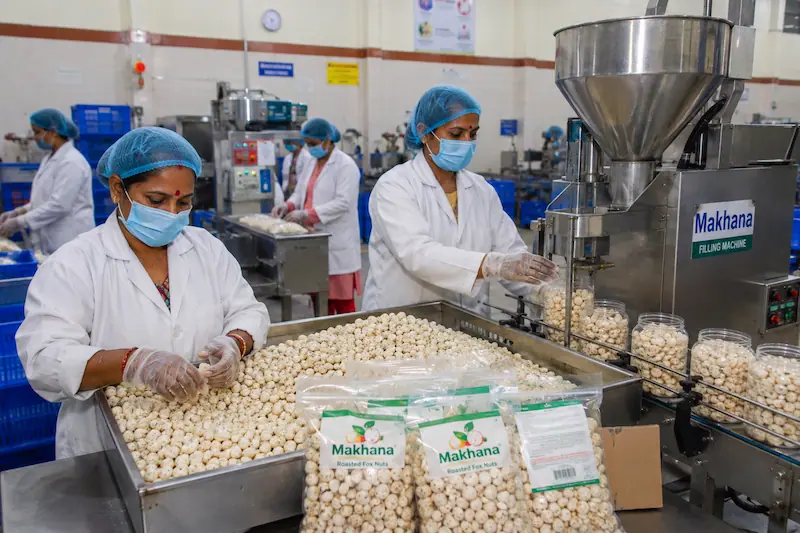
Start a makhana business at the scale that fits your capital, from a low-cost home-based roasted and packed model to a commercial processing unit with grading, roasting, flavouring and automated packing.
Mini Rice Mill Business
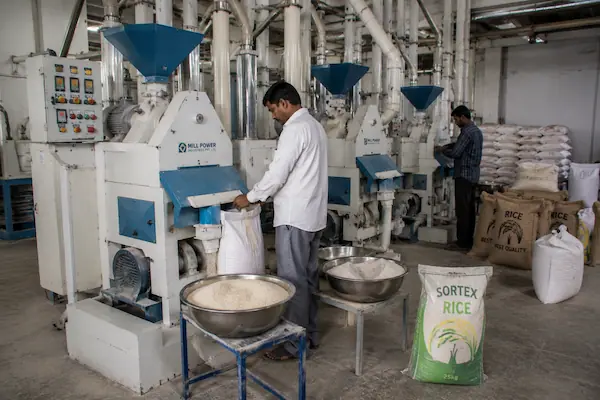
Start a mini rice mill for custom paddy milling or build a small commercial rice-processing operation with hulling, polishing, grading and packing as production volume grows.
15. Data Verification & Methodology
This business profile was audited on 28 Aug 2026 with a data confidence score of 95%.
Equipment pricing and operational assumptions are cross-referenced with Indian industrial machinery suppliers, commercial lease indices, and official Ministry guidelines.
16. Frequently Asked Questions
Yes, a very small broiler unit can be possible when a suitable existing shed is already available. The main cash requirement is for chicks, first-cycle feed, litter, basic equipment and health inputs. Building a new shed will increase the investment substantially.
NABARD 2025-26 gives a benchmark total cost of about ₹5.30 lakh for a 1,000-bird all-in-all-out deep-litter broiler farm. The benchmark includes approximately ₹2.55 lakh for the shed, ₹16,000 equipment, ₹35,000 day-old chicks, ₹2.10 lakh feed and other recurring costs. A farm using an existing shed can require materially less fixed capital.
Space depends on age, climate and housing design. NABARD uses approximately 1 sq ft per bird in its 1,000-bird deep-litter model. TNAU guidance shows around 0.8 to 0.9 sq ft per bird around 6-7 weeks in one broiler management reference. Additional space is required for feed storage, service access, cleaning, water systems and biosecurity.
TNAU data reports approximately 2.51 kg cumulative feed consumption per bird at 42 days and an FCR around 1.89 in the cited dataset. Actual commercial performance varies according to genetics, feed quality, temperature, disease and management, so every flock should be tracked individually.
Feed prices vary by formulation, brand, growth stage and location. NABARD 2025-26 uses ₹35/kg as a planning assumption for its 1,000-bird broiler unit. Actual dealer quotations should be obtained before every cycle because feed is normally the largest single cost in independent broiler farming.
A commercial broiler flock is commonly marketed at around 35-42 days depending on target weight, strain, weather and market demand. Some operations market earlier or later. The farmer should follow the production and market plan agreed with the buyer or integrator.
There is no single reliable India-wide farm-gate price. Recent Karnataka market references have indicated approximately ₹79-₹92/kg at different points, while other markets can be materially higher or lower. Use the local farm-gate quotation available when the flock is marketed instead of putting one national price into a financial forecast.
It depends on the entrepreneur’s risk tolerance and local integrator terms. Contract growing can reduce exposure to chick, feed and market procurement because the integrator may provide these inputs and buy or settle production under an agreed formula. Independent farming provides more control but exposes the owner directly to input and live-bird price volatility. Compare the actual growing-charge formula, mortality rules, FCR incentives, payment period and input responsibility before signing.
Disease, mortality, heat stress, poor ventilation, contaminated water, weak biosecurity, feed-price increases and live-bird price declines are the major risks. DAHD recommends structural and operational biosecurity, access control, appropriate location and continuous flock-health monitoring. Keep emergency cash available because one disease event or severe price movement can materially affect a single production cycle.
NABARD 2025-26 gives a benchmark total project cost of about ₹62.07 lakh for a 15,000-bird environmentally controlled contract broiler farm. It includes around ₹30.60 lakh shed cost, ₹24 lakh equipment, ₹4.50 lakh generator and ₹1.50 lakh electrical connection. Chicks, feed and veterinary inputs are supplied by the integrator in that contract model, so independent farming would require a different working-capital calculation.
Potential finance and subsidy options depend on the poultry activity, state, applicant category and current scheme rules. NABARD unit-cost documents are useful project-appraisal benchmarks but are not subsidies. The entrepreneur should check current animal-husbandry, rural-development, MSME and bank-linked schemes before including any subsidy in the financial plan. Do not deduct a subsidy until eligibility and approval conditions are confirmed.
Udyam is the official MSME registration system and is free and paperless. Poultry farming itself is primarily an animal-husbandry activity, so the applicability and usefulness of Udyam can depend on how the enterprise is structured and whether it also carries out processing, manufacturing or other eligible activities. It should not be described as universally mandatory for every poultry farm.
Use reliable chick sources, clean water, correct brooding, adequate ventilation, proper litter management, veterinary-guided vaccination, controlled access and daily flock observation. Control rodents and wild birds, restrict visitors, maintain cleaning schedules and record mortality, feed intake and weight. Early detection is critical because poor health can increase both mortality and feed conversion losses.
Broiler farming normally provides faster turnover because birds are sold after a comparatively short cycle, but live-bird prices can change sharply. Layer farming requires longer capital lock-in before stable egg production but can generate more regular daily revenue once the flock is established. The decision should depend on local market access, working capital, technical support and management capability rather than a headline profit claim.
Start with a flock size that can be supervised properly and where mortality, FCR and selling price can be measured accurately. Upgrade the shed and equipment only when the current capacity is consistently utilised. For larger growth, secure buyer arrangements, feed supply, veterinary support and emergency power before increasing bird numbers. More birds without stronger management can increase losses faster than revenue.