
Makhana Processing Business
Start a makhana business at the scale that fits your capital, from a low-cost home-based roasted and packed model to a commercial processing unit with grading, roasting, flavouring and automated packing.
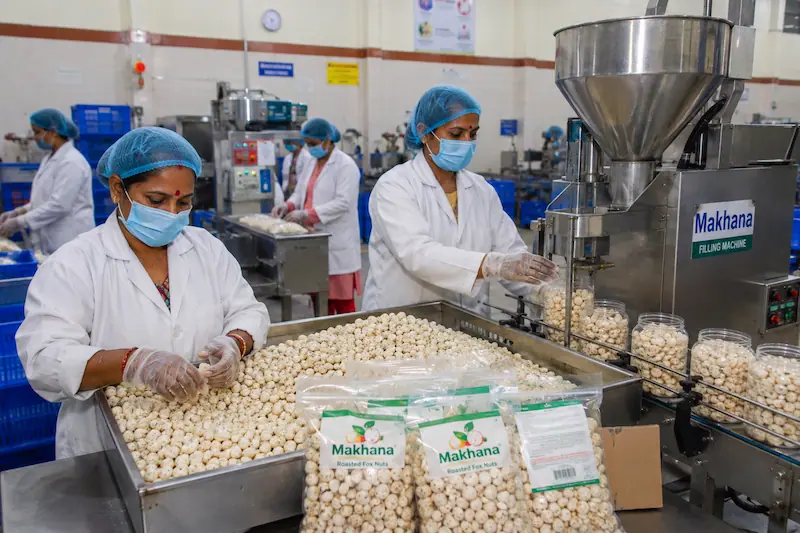
1. Market Demand & Business Viability
2. Itemized Startup Cost Breakdown
Every line item is audited against verified vendor quotes and realistic fit-out averages.
| Cost Head & Item | Min (₹) | Typical (₹) | Max (₹) | Allocation Notes |
|---|---|---|---|---|
| Machinery & Equipment | ||||
|
Existing Workspace Preparation and Food-Safe Storage
|
₹2,000 | ₹15,000 | ₹75,000 | 1.00 setup • Micro businesses can use a clean existing room or suitable shop area where legally permitted. Includes tables, bins, shelves and basic hygiene setup. |
|
Digital Weighing Scale and Manual Sorting Equipment
|
₹1,500 | ₹6,000 | ₹25,000 | 1.00 set • Suitable for micro and small operations. Mechanical grading is unnecessary at the lowest scale. |
|
Small-Batch Makhana Roasting Equipment
|
₹5,000 | ₹25,000 | ₹1,00,000 | 1.00 unit • Optional for businesses buying already roasted or ready-popped product. Becomes useful for differentiated flavoured products. |
|
Manual or Semi-Automatic Pouch Sealing Equipment
|
₹1,500 | ₹12,000 | ₹1,50,000 | 1.00 set • Micro operators can use a basic impulse sealer. Higher-volume businesses can move to semi-automatic packing. |
|
Mechanised Makhana Roasting and Popping System
|
₹1,25,000 | ₹3,00,000 | ₹6,50,000 | 1.00 unit • Required only when raw foxnut seed is processed in-house at commercial scale. ICAR-CIPHET has developed mechanised preliminary roasting and popping technologies. |
|
Popped Makhana Grading Machine
|
₹1,00,000 | ₹1,50,000 | ₹4,00,000 | 1.00 unit • ICAR reports a three-grade popped-makhana grader with approximately 200 kg/hour capacity, a 1-hp motor and two unskilled operators, with tentative machine cost of ₹1.5 lakh. |
|
Commercial Makhana Cleaning and Grading Equipment
|
₹1,00,000 | ₹2,50,000 | ₹6,00,000 | 1.00 line • For larger plants handling materially higher raw-material throughput. |
|
Seasoning and Flavouring Mixer
|
₹3,000 | ₹30,000 | ₹1,50,000 | 1.00 unit • Small brands can use manual or small-batch food-grade mixers. Commercial production benefits from controlled batch mixing. |
|
Automatic Multi-Head Makhana Packing Machine
|
₹2,50,000 | ₹4,90,000 | ₹7,50,000 | 1.00 unit • The NIFTEM-PMFME model lists a four-head packing machine at ₹4.90 lakh. Actual price depends on weighing heads, pouch format, speed and automation. |
|
Batch Coding and Air Compressor
|
₹20,000 | ₹55,000 | ₹90,000 | 1.00 set • Useful for organised retail packaging. NIFTEM lists hot-foil batch coding at ₹20,000 and air compressor at ₹35,000 in its model machinery list. |
| Premises & Advance Deposit | ||||
|
Commercial Premises Deposit and Basic Fit-Out
|
₹0 | ₹60,000 | ₹2,50,000 | 1.00 setup • Not required for a suitable home-based model. Dedicated units may need refundable deposit and food-safe fit-out. |
| Interior Setup & Furnishing | ||||
|
Electrical, Ventilation and Utility Installation
|
₹2,000 | ₹25,000 | ₹2,00,000 | 1.00 setup • Micro businesses have limited utility needs. Commercial roasting and automated packing require dedicated circuits and ventilation. |
| Licensing & Registrations | ||||
|
Registrations, FSSAI and Local Compliance Budget
|
₹100 | ₹5,000 | ₹30,000 | 1.00 package • Udyam registration is free. FSSAI fee for petty registration is ₹100 per year according to FSSAI guidance; higher food-business licensing categories have different fees and requirements. Local permissions depend on location and activity. |
| Initial Raw Materials & Inventory | ||||
|
Initial Makhana Inventory and Packaging Working Capital
|
₹10,000 | ₹1,00,000 | ₹7,13,000 | 1.00 working-capital-batch • Micro operators can rotate small quantities. The NIFTEM-PMFME benchmark provides ₹7.13 lakh working capital for its 21,600 kg/year model, including raw material and finished stock requirements. |
| Total Setup Investment | ₹6,20,100 | ₹15,23,000 | ₹41,83,000 | |
3. Plant Machinery & Equipment Catalog
| Machine / Tool Asset | Required Qty | Estimated Unit Price | Commercial Specs & Power |
|---|---|---|---|
| Makhana Cleaning and Grading Line | 1 line | ₹2,50,000 | Commercial raw-material cleaning and grading |
| Makhana Pouch Packing Machine | 1 unit | ₹25,000 | Basic manual or automatic pouch packing depending on scale |
| Makhana Seasoning and Flavouring Mixer | 1 unit | ₹30,000 | Recommended for consistent flavoured-product batches |
| Mechanised Makhana Roaster and Popper | 1 unit | ₹3,00,000 | For businesses processing raw foxnut seed in-house at commercial scale |
| Popped Makhana Grading Machine | 1 unit | ₹1,50,000 | Useful when volume justifies mechanical separation by size |
| Small Batch Makhana Roaster | 1 unit | ₹30,000 | Starter equipment for low-volume roasted or flavoured makhana operations |
4. Space, Power & Utilities
Minimum required footprint for machinery layout, raw material inventory storage, and dispatch.
Commercial power load with dedicated sub-meter and industrial earthing connection.
Adequate municipal utility inlet and local commercial/industrial zoning compliance.
5. Monthly Operating Expenses (OPEX)
Recurring operational commitments required every month to sustain full production.
| Expense Category & Head | Min / Mo | Typical / Mo | Max / Mo | Operational Notes |
|---|---|---|---|---|
| Workspace or Shop Rent Commercial Rent | ₹0 | ₹8,000 | ₹50,000 | Home-based operators may have no incremental rent. Dedicated commercial premises require rent. |
| Electricity, Heating and Processing Utilities Staff Salaries & Wages | ₹500 | ₹5,000 | ₹30,000 | Depends on roasting method, electric equipment, operating hours and automation. |
| Labour and Packing Assistance Electricity & Commercial Utilities | ₹0 | ₹18,000 | ₹1,00,000 | Micro owner-managed models may require no separate employee. Commercial units require operators and helpers. |
| Local Delivery and Distribution Monthly Raw Materials | ₹1,000 | ₹6,000 | ₹35,000 | Depends on local retailer delivery, distributor routes and shipment frequency. |
| Packaging Materials and Labels Packaging Materials | ₹1,000 | ₹8,000 | ₹50,000 | Includes pouches, labels, cartons and other packaging consumables. |
| Maintenance, Cleaning and Quality Control Logistics & Delivery | ₹500 | ₹4,000 | ₹20,000 | Cleaning, minor repairs, machine servicing and quality-control consumables. |
| Sales and Customer Acquisition Logistics & Delivery | ₹500 | ₹5,000 | ₹30,000 | Samples, local retailer visits, digital promotion and distributor acquisition. |
| Accounting, Compliance and Administration Logistics & Delivery | ₹1,000 | ₹5,000 | ₹15,000 | Bookkeeping, applicable filings and basic administration. |
| Total Monthly Overheads | ₹4,500 | ₹59,000 | ₹3,30,000 |
6. Revenue Model, Profit Margin & Break-Even
Fixed monthly overheads (₹59,000) are 100% covered at 596 kg finished makhana/month. Estimated capital payback timeline: 0 months.
7. Licences, Registrations & Compliance
Udyam MSME Registration
Free online government registration. Required to access bank priority lending, PMEGP subsidies, and delayed payment dispute resolution.
GST Registration
Mandatory if annual turnover exceeds ₹40 Lakhs (goods) or ₹20 Lakhs (services). Enables input tax credit on commercial machinery purchases.
Shop & Commercial Establishment Licence
Issued by local municipal corporation / panchayat authority for commercial premises operation and labor compliance.
Commercial Bank Current Account
Dedicated current account under business legal entity name along with trade PAN and UPI merchant QR.
8. Operational Skills Required
Raw-makhana procurement, quality grading, moisture-safe storage, roasting, popping fundamentals, seasoning, food hygiene, weighing, packaging, inventory control, batch costing, B2B sales and basic digital marketing.
9. Customer Acquisition Strategy
Micro operators should use WhatsApp, local kirana stores, neighbourhood retailers, offices and direct household sales. Small and commercial units should approach premium grocery stores, snack distributors, restaurants, food-service buyers, regional retailers and private-label brands. Larger processors can build distributor networks, modern trade, e-commerce and institutional supply. Product differentiation should focus on grade, crispness, roast consistency, flavour consistency, packaging and supply reliability rather than unsupported health claims.
10. Interactive Profit & Expense Simulator
Adjust customer ticket sizes, daily footfall, and fixed overheads to see real-time net returns.
Adjust Financial Assumptions
Slide or type direct valuesSimulation Output
Mathematical Precision11. Founder Profile Suitability
Highly Recommended If:
Suitable for home-based food entrepreneurs, small traders, local snack brands, rural processors, private-label manufacturers, regional distributors and established food-processing companies. The right entry model depends on available capital, access to raw or popped makhana and the ability to build repeat buyers.
Not Ideal If:
Not ideal for entrepreneurs who have no reliable source of makhana, cannot manage food quality and inventory, or expect high margins without building a sales network. Large machinery is a poor first investment when demand and procurement have not been validated.
12. Operational Risks & Mitigation Strategy
Key risks include raw-material price volatility, poor seed quality, low popping recovery, breakage, moisture exposure, inconsistent roasting, unsold inventory, customer credit and rising packaging costs. Control these through supplier qualification, batch-wise quality checks, proper storage, standard roasting parameters, FIFO, limited credit and demand-led production. Makhana is a high-value inventory item, so working-capital discipline is more important than simply buying larger machinery.
13. Step-by-Step 90-Day Launch Plan
Feasibility & Premises Lease
Finalize commercial space lease agreement, verify power load capacity, and apply for Udyam MSME certification.
Machinery Procurement & Fit-Out
Order plant machinery, complete electrical/plumbing fit-out, and setup commercial bank current account.
Trial Runs, Hiring & Licences
Install and calibrate equipment, conduct staff SOP training, and secure local municipal trade licenses.
Soft Launch & Marketing Kickoff
Initiate neighborhood promotional campaigns, setup Google Business listing, and commence commercial operations.
14. Similar Business Opportunities
Explore audited business blueprints in related sectors & investment ranges.
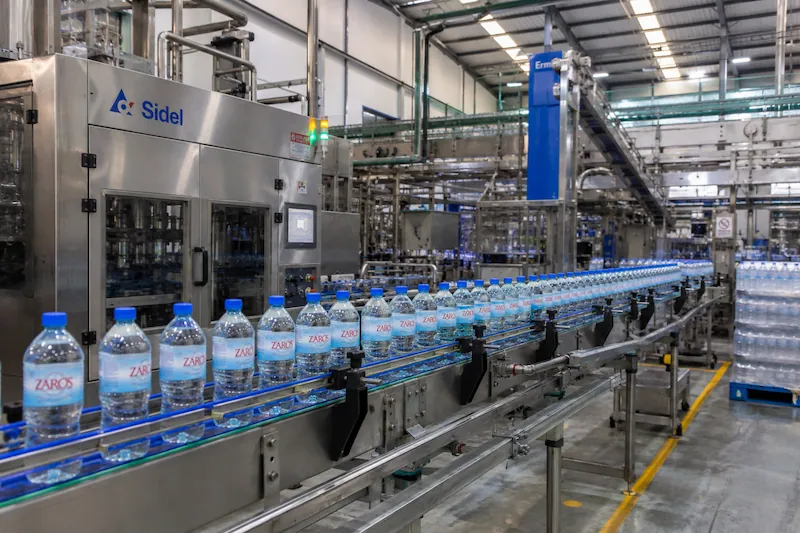
Packaged Drinking Water Bottle Manufacturing Plant
Comprehensive business blueprint for setting up a 2000 LPH BIS/ISI certified packaged drinking water unit, automated 20-liter jar packaging, and PET bottle bottling line.
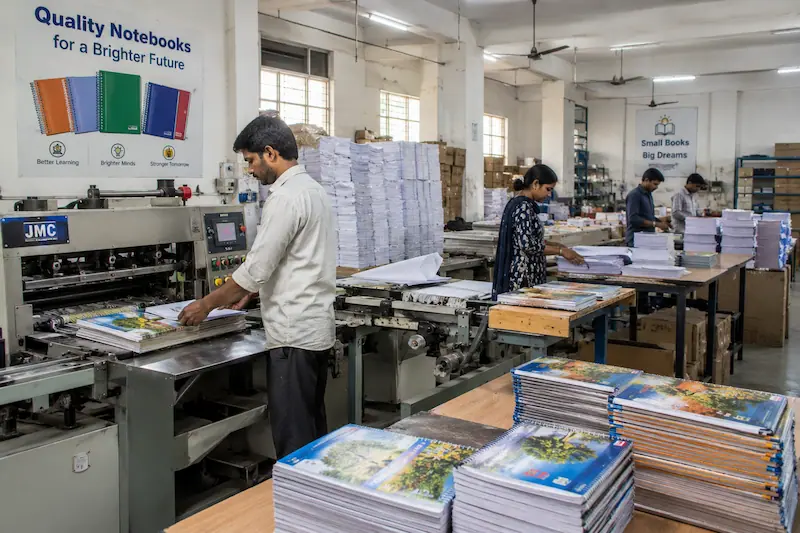
Notebook Manufacturing Business
A scalable notebook manufacturing opportunity covering an asset-light micro start, small workshop production, semi-commercial manufacturing and organised commercial supply.
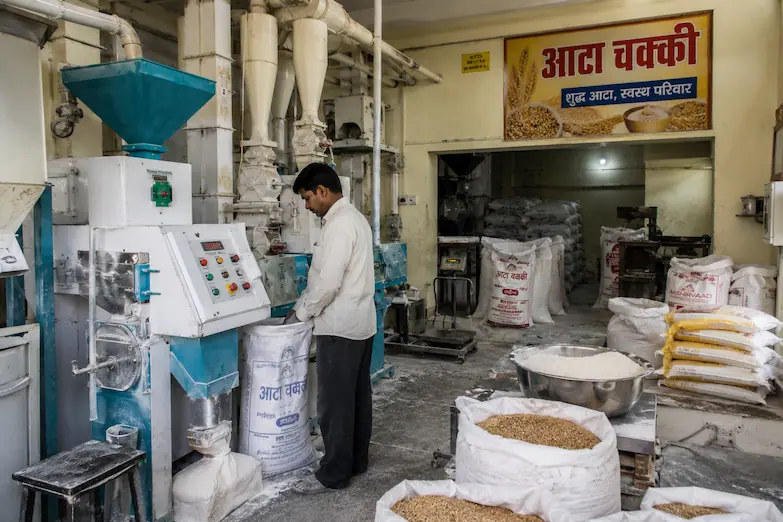
Atta Chakki Flour Mill Business
Start an atta chakki business from a compact customer-grinding shop with a relatively low entry cost, or scale into a commercial flour mill serving households, retailers, restaurants and institutional buyers.
15. Data Verification & Methodology
This business profile was audited on 28 Aug 2026 with a data confidence score of 95%.
Equipment pricing and operational assumptions are cross-referenced with Indian industrial machinery suppliers, commercial lease indices, and official Ministry guidelines.
16. Frequently Asked Questions
Yes, but the realistic model is not a full raw-seed processing factory. Buy ready popped makhana, sort it, optionally roast or flavour it, weigh it and pack it in small quantities. This keeps fixed investment low. The biggest challenge is building enough repeat sales while controlling packaging and inventory costs.
A realistic starting range can be around ₹25,000 to ₹75,000 for a micro value-addition model using ready popped makhana and existing suitable premises. A dedicated small setup can move towards roughly ₹75,000 to ₹3 lakh, while a stronger semi-commercial setup can require around ₹3 lakh to ₹8 lakh. The exact amount depends on whether raw seed processing is done in-house.
The official NIFTEM-PMFME model for a 21,600 kg/year unit gives a total project cost of ₹27.23 lakh, comprising ₹16.60 lakh machinery, ₹3.50 lakh miscellaneous fixed assets and ₹7.13 lakh working capital. This is a structured processing-unit benchmark, not the minimum amount needed to enter the business.
No. A new entrepreneur can buy ready popped makhana and focus on sorting, roasting, seasoning, packing and sales. In-house popping becomes more sensible when raw-seed procurement and sales volume are large enough to justify the machine, operators, power and process-control requirements.
At micro scale, a weighing scale, food-grade containers and an impulse sealer may be enough. A small roaster or seasoning mixer can be added for flavoured products. Mechanical grading, raw-seed popping and automatic packing should normally be added only as production volume justifies them.
ICAR-CIPHET reports a popped-makhana grading machine that separates three size grades and flattened or unpopped material. The reported machine has approximately 200 kg/hour capacity, a 1-hp motor and requires two unskilled operators, with a tentative cost of ₹1.5 lakh. Actual commercial quotations can differ.
The need varies strongly by scale. A micro seller may rotate ₹10,000 to ₹30,000 of stock, a small operation may need roughly ₹50,000 to ₹2 lakh, and a larger processor may need several lakh rupees because raw makhana and finished stock are both high-value inventory. The NIFTEM-PMFME benchmark allocates ₹7.13 lakh working capital for its 21,600 kg/year model.
There is no single reliable net-margin percentage for every model. The official NIFTEM-PMFME model reports profit after tax of ₹2.05 lakh on ₹82.27 lakh gross sales in year one and ₹8.13 lakh on ₹133.84 lakh gross sales in year five under its own assumptions. This is roughly 2.49% and 6.07% after-tax respectively. Actual margins can differ materially because procurement price, grade recovery, breakage, sales channel, packaging and credit terms change the economics.
The NIFTEM-PMFME model specifies a 14 kW power connection, approximately 112 units of daily consumption, 2,800 units per month and a model electricity cost of ₹28,000 per month at ₹10 per unit. This should not be copied into every business model because a micro unit using manual equipment can require much less power.
FSSAI states that every Food Business Operator must be licensed or registered. Its current guidance says petty food businesses up to ₹12 lakh annual turnover use registration, with a registration fee of ₹100 per year; businesses above that threshold require a licence under the applicable category. Udyam registration is free and paperless. GST and local permissions depend on the business structure, turnover, supply pattern and location.
A qualifying food-processing or manufacturing project may be eligible for PMEGP subject to applicant eligibility, project classification and bank appraisal. Under the revised PMEGP guidelines, the maximum project cost admissible for margin-money subsidy in manufacturing is ₹50 lakh. The subsidy rate depends on beneficiary category and rural or urban location. A bank loan and subsidy are subject to scheme conditions and should not be treated as guaranteed approval.
A safer progression is to prove repeat sales first, then add roasting and flavouring, then mechanical grading or better packing, and finally raw-seed popping and higher automation when throughput supports it. More capital does not automatically mean more profit; in many cases, additional working capital, procurement quality and distribution produce better returns than premature machinery purchases.
The business can scale from a one-person value-addition operation to a multi-machine processing plant. Expansion can come from higher throughput, multiple grades, flavoured products, private-label production, institutional sales, regional distributors, organised retail, e-commerce and export-oriented channels. At larger scale, inventory financing, quality systems, staffing and customer credit become major management issues.