
Atta Chakki Flour Mill Business
Start an atta chakki business from a compact customer-grinding shop with a relatively low entry cost, or scale into a commercial flour mill serving households, retailers, restaurants and institutional buyers.
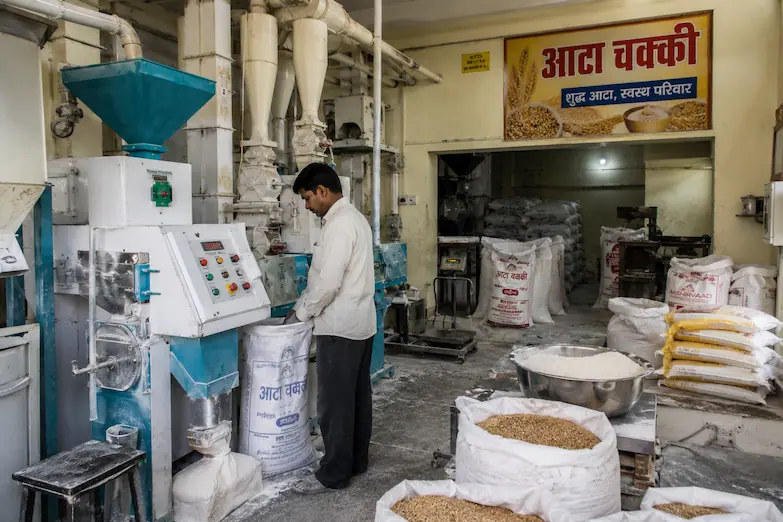
1. Market Demand & Business Viability
2. Itemized Startup Cost Breakdown
Every line item is audited against verified vendor quotes and realistic fit-out averages.
| Cost Head & Item | Min (₹) | Typical (₹) | Max (₹) | Allocation Notes |
|---|---|---|---|---|
| Machinery & Equipment | ||||
|
Small Commercial Atta Chakki
|
₹30,000 | ₹60,000 | ₹1,20,000 | 1.00 unit • Current Indian market references show commercial chakki machines in lower-capacity configurations around this range. Higher HP and higher-output machines cost more. |
|
Digital Weighing Scale, Bins and Work Tables
|
₹5,000 | ₹15,000 | ₹40,000 | 1.00 set • Required for accurate customer weighing, grain handling and clean operation. |
|
Basic Flour Sieving and Cleaning Equipment
|
₹3,000 | ₹15,000 | ₹75,000 | 1.00 set • Micro grinding shops may use manual cleaning and sieving. Mechanical cleaning and sifters become more useful for packaged flour production. |
|
Impulse Sealer and Basic Packing Equipment
|
₹2,000 | ₹8,000 | ₹30,000 | 1.00 set • Enough for small retail pouches. Automated packing should be added only after packaged-flour demand is established. |
|
Commercial Flour Sifter / Vibro Sifter
|
₹15,000 | ₹35,000 | ₹1,00,000 | 1.00 unit • Useful for consistent particle size and packaged atta production at higher throughput. |
|
7.5-10 HP Commercial Atta Chakki
|
₹55,000 | ₹85,000 | ₹1,50,000 | 1.00 unit • Current Indian supplier references place 7.5-10 HP commercial machines broadly around ₹58,000 to ₹1.18 lakh depending on capacity and configuration. One current 10 HP manufacturer listing shows approximately 100 kg/hour output. |
|
150 kg/hour Commercial Atta Chakki System
|
₹1,50,000 | ₹3,50,000 | ₹5,00,000 | 1.00 unit • A current Indian listing shows a 150 kg/hour, 10 HP, three-phase automatic atta chakki around ₹3.5 lakh. Actual quotes vary by construction, automation, controls and accessories. |
| Premises & Advance Deposit | ||||
|
Shop or Small Commercial Premises Deposit and Fit-Out
|
₹0 | ₹50,000 | ₹2,00,000 | 1.00 setup • Micro owners can operate from owned premises where permitted. Rented shops may require advance/deposit plus electrical and flooring work. |
| Interior Setup & Furnishing | ||||
|
Electrical Wiring, Motor Protection and Power Installation
|
₹5,000 | ₹30,000 | ₹1,00,000 | 1.00 setup • Micro 1-2 HP equipment can have low additional electrical needs. Commercial 7.5-10 HP machines may require dedicated wiring and potentially three-phase supply. |
| Licensing & Registrations | ||||
|
FSSAI, Udyam and Local Registration Budget
|
₹100 | ₹7,000 | ₹30,000 | 1.00 package • FSSAI registration requirements depend on turnover and production capacity. Udyam registration itself is free. Local trade permissions depend on location. |
| Initial Raw Materials & Inventory | ||||
|
Initial Wheat and Packaging Working Capital
|
₹10,000 | ₹75,000 | ₹3,00,000 | 1.00 working-capital-batch • Customer-grinding shops can keep working capital low because customers bring wheat. Flour-selling businesses require more inventory and packaging cash. |
| Total Setup Investment | ₹2,75,100 | ₹7,30,000 | ₹16,45,000 | |
3. Plant Machinery & Equipment Catalog
| Machine / Tool Asset | Required Qty | Estimated Unit Price | Commercial Specs & Power |
|---|---|---|---|
| 10 HP Commercial Atta Chakki | 1 unit | ₹83,100 | Suitable upgrade for higher shop throughput |
| 150 kg/hour Automatic Atta Chakki | 1 unit | ₹3,50,000 | Commercial reference for higher-volume automatic milling |
| Automatic Flour Packing Machine | 1 unit | ₹2,50,000 | Use only when packaged-flour volume justifies automation |
| Commercial Vibro Flour Sifter | 1 unit | ₹35,000 | Recommended for consistent packaged flour production |
| Small Commercial Atta Chakki | 1 unit | ₹60,000 | Starter machine for customer-wheat grinding |
4. Space, Power & Utilities
Minimum required footprint for machinery layout, raw material inventory storage, and dispatch.
Commercial power load with dedicated sub-meter and industrial earthing connection.
Adequate municipal utility inlet and local commercial/industrial zoning compliance.
5. Monthly Operating Expenses (OPEX)
Recurring operational commitments required every month to sustain full production.
| Expense Category & Head | Min / Mo | Typical / Mo | Max / Mo | Operational Notes |
|---|---|---|---|---|
| Shop or Workspace Rent Commercial Rent | ₹0 | ₹8,000 | ₹30,000 | Owned premises can eliminate rent. Commercial market rent varies significantly by city and footfall. |
| Electricity and Motor Operating Cost Staff Salaries & Wages | ₹800 | ₹4,000 | ₹15,000 | Small machines consume less power; 7.5-10 HP and larger commercial machines require substantially more electricity. |
| Operator or Helper Wages Electricity & Commercial Utilities | ₹0 | ₹15,000 | ₹50,000 | Owner-operated shops can have no separate salary expense. Larger mills require operators, helpers and packing workers. |
| Local Delivery and Transport Monthly Raw Materials | ₹500 | ₹3,000 | ₹15,000 | Relevant when offering home pickup, delivery or B2B supply. |
| Cleaning, Maintenance and Machine Parts Packaging Materials | ₹500 | ₹2,500 | ₹8,000 | Includes cleaning materials, bearings, belts, stones or burr-related maintenance and minor repairs. |
| Packaging and Labels Packaging Materials | ₹0 | ₹5,000 | ₹30,000 | Minimal for customer-grinding shops and material for packaged-attain brands. |
| Local Marketing and Customer Acquisition Logistics & Delivery | ₹500 | ₹2,500 | ₹15,000 | Local signage, pamphlets, WhatsApp promotion, retailer visits and introductory offers. |
| Total Monthly Overheads | ₹2,300 | ₹40,000 | ₹1,63,000 |
6. Revenue Model, Profit Margin & Break-Even
Fixed monthly overheads (₹40,000) are 100% covered at 5,682 kg customer wheat grinding/month. Estimated capital payback timeline: 0 months.
7. Licences, Registrations & Compliance
Udyam MSME Registration
Free online government registration. Required to access bank priority lending, PMEGP subsidies, and delayed payment dispute resolution.
GST Registration
Mandatory if annual turnover exceeds ₹40 Lakhs (goods) or ₹20 Lakhs (services). Enables input tax credit on commercial machinery purchases.
Shop & Commercial Establishment Licence
Issued by local municipal corporation / panchayat authority for commercial premises operation and labor compliance.
Commercial Bank Current Account
Dedicated current account under business legal entity name along with trade PAN and UPI merchant QR.
8. Operational Skills Required
Grain cleaning, machine operation, flour fineness control, basic maintenance, food hygiene, customer handling, weighing, packaging, inventory management, costing and local sales.
9. Customer Acquisition Strategy
For micro shops, compete on freshness, clean premises, transparent weighing, consistent grinding and quick service. Add home pickup and delivery where economics permit. Small retail mills can sell fresh atta subscriptions, multigrain blends and custom flour mixes. Commercial operators should target kirana stores, restaurants, hostels, caterers, bakeries where suitable, private-label buyers and regional distributors.
10. Interactive Profit & Expense Simulator
Adjust customer ticket sizes, daily footfall, and fixed overheads to see real-time net returns.
Adjust Financial Assumptions
Slide or type direct valuesSimulation Output
Mathematical Precision11. Founder Profile Suitability
Highly Recommended If:
Suitable for entrepreneurs seeking a low-investment local business, shop owners, rural and semi-urban operators, family businesses, small food brands and flour-processing entrepreneurs. Particularly suitable where there is dense residential demand, local wheat supply and limited access to freshly ground atta.
Not Ideal If:
Not ideal if the location has very low footfall, strong nearby competition with established grinding shops, unreliable electricity, no space for clean grain handling, or if the entrepreneur wants a large branded flour business without sufficient working capital and distribution capability.
12. Operational Risks & Mitigation Strategy
Main risks include low local footfall, machine wear, stone or burr replacement, motor failure, flour contamination, dust, inconsistent fineness, wheat price volatility, low inventory turnover and credit sales. Reduce risk with preventive maintenance, dust control, cleaning SOPs, separate grain and finished-flour storage, accurate weighing, batch records and limited customer credit. For packaged atta, moisture control and packaging integrity are particularly important.
13. Step-by-Step 90-Day Launch Plan
Feasibility & Premises Lease
Finalize commercial space lease agreement, verify power load capacity, and apply for Udyam MSME certification.
Machinery Procurement & Fit-Out
Order plant machinery, complete electrical/plumbing fit-out, and setup commercial bank current account.
Trial Runs, Hiring & Licences
Install and calibrate equipment, conduct staff SOP training, and secure local municipal trade licenses.
Soft Launch & Marketing Kickoff
Initiate neighborhood promotional campaigns, setup Google Business listing, and commence commercial operations.
14. Similar Business Opportunities
Explore audited business blueprints in related sectors & investment ranges.
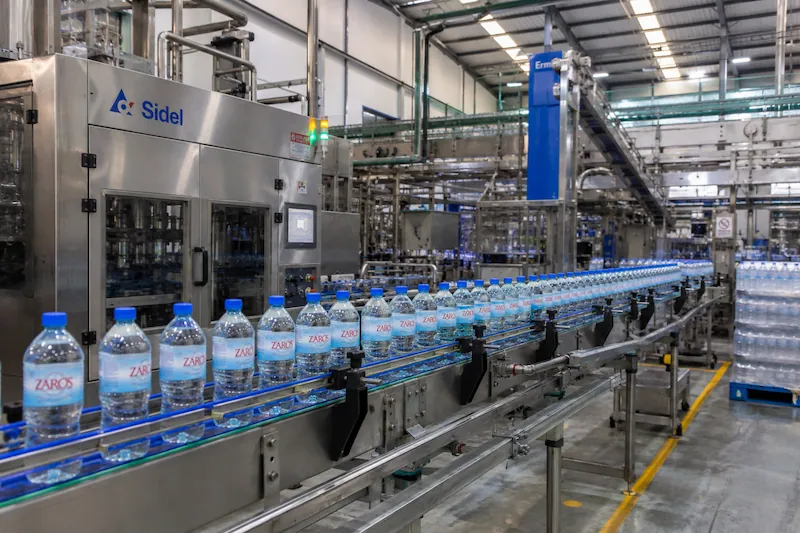
Packaged Drinking Water Bottle Manufacturing Plant
Comprehensive business blueprint for setting up a 2000 LPH BIS/ISI certified packaged drinking water unit, automated 20-liter jar packaging, and PET bottle bottling line.
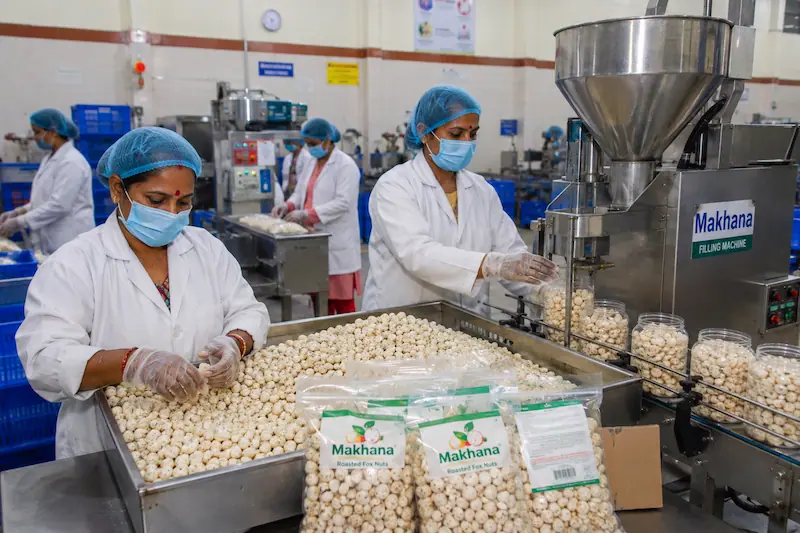
Makhana Processing Business
Start a makhana business at the scale that fits your capital, from a low-cost home-based roasted and packed model to a commercial processing unit with grading, roasting, flavouring and automated packing.
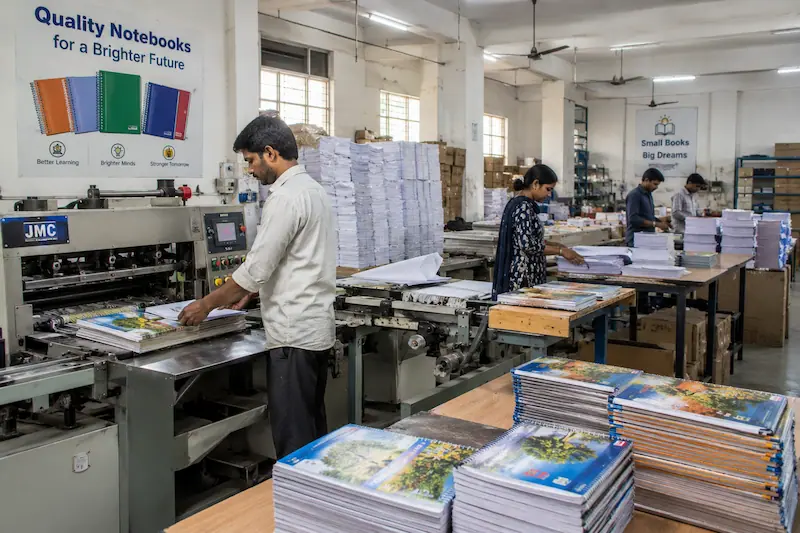
Notebook Manufacturing Business
A scalable notebook manufacturing opportunity covering an asset-light micro start, small workshop production, semi-commercial manufacturing and organised commercial supply.
15. Data Verification & Methodology
This business profile was audited on 28 Aug 2026 with a data confidence score of 94%.
Equipment pricing and operational assumptions are cross-referenced with Indian industrial machinery suppliers, commercial lease indices, and official Ministry guidelines.
16. Frequently Asked Questions
Yes, a micro customer-grinding shop can be possible around this level if suitable premises are already available and the entrepreneur chooses a small commercial machine. The business should initially focus on grinding customer-provided wheat rather than buying large wheat inventory. A larger retail flour business needs more capital because inventory and packaging become significant.
A realistic planning range is roughly ₹50,000 to ₹1 lakh for a micro customer-grinding setup using an existing or low-cost premises. Around ₹1.5 lakh to ₹4 lakh is more appropriate when the business also buys wheat and sells its own flour, adds better cleaning or sieving and carries inventory.
Current market references show substantial variation. A 3 to 5 HP commercial machine may fall around ₹33,500 to ₹72,000, while 7.5 to 10 HP machines can broadly fall around ₹58,000 to ₹1.18 lakh depending on capacity and manufacturer. One current 10 HP manufacturer listing shows approximately 100 kg/hour output at ₹83,100. A separate 150 kg/hour, 10 HP three-phase automatic listing is around ₹3.5 lakh. Compare capacity, build, motor, warranty and included accessories rather than price alone.
No. A small customer-grinding shop may start with a lower-capacity commercial machine if daily demand is modest. A 7.5 or 10 HP machine becomes useful when throughput needs rise. Buying a large machine before the shop has enough customers can increase capital cost and underutilisation.
Power depends on motor size. A 5 HP motor is about 3.7 kW of motor rating, while a 10 HP motor is about 7.5 kW. Actual electrical consumption is lower or higher over time depending on loading, duty cycle and other equipment. Small machines may use single-phase supply, while larger commercial machines may require three-phase supply. Final sanctioned load should be based on the selected machine nameplate and local electricity rules.
Yes. This is one of the lowest-working-capital versions of the business. The customer supplies wheat and pays a grinding charge per kilogram. The operator mainly carries equipment, electricity, rent and labour costs. This model usually has lower revenue per customer than packaged flour manufacturing but also much lower inventory risk.
Yes, but the economics are different. You need wheat procurement, cleaning, grinding, weighing, packaging, labelling, inventory and sales distribution. Start with limited SKUs and local repeat customers rather than carrying large inventory. Packaged flour also creates additional food-safety, labelling and quality-control obligations.
FSSAI states that petty food manufacturers with annual turnover up to ₹12 lakh can fall under registration. Its licensing guidance specifically places grain, cereal and pulse milling units above 100 kg/day within the licensing framework rather than the petty registration category. The exact licence or registration should be selected according to actual production capacity, turnover and the applicable current FoSCoS category.
Udyam registration is the official MSME registration system and is free and paperless. It can be useful for formalising the business and accessing MSME-related finance and schemes. It is separate from FSSAI food-business compliance.
There is no single reliable margin for every atta chakki because customer grinding and packaged flour have completely different economics. Customer grinding has low material cost but depends on daily footfall and grinding charges. Packaged flour has much higher revenue potential but wheat becomes the dominant variable cost and distributor or retailer margins reduce the final contribution. Profit should be calculated from local grinding charges or actual wheat procurement and flour selling prices rather than a fixed internet percentage.
Food-processing enterprises may be eligible for applicable credit-linked schemes subject to current guidelines, applicant category and bank appraisal. PMFME provides a 35% credit-linked capital subsidy with a maximum of ₹10 lakh per eligible individual micro food-processing unit on eligible project cost under its scheme framework. Eligibility, availability and product or district conditions must be checked at application time. Do not treat subsidy as guaranteed cash.
A micro customer-grinding shop can operate in roughly 80 to 150 sq ft if the machine, customer counter, storage and dust control are laid out efficiently. A small flour-selling operation generally benefits from about 150 to 500 sq ft, while commercial production with cleaning, sifting, storage and packing can require substantially more space. Actual requirements depend on machine footprint, storage volume and workflow.
First establish daily customer volume with the smallest machine that can handle demand. Then add home delivery, packaged fresh atta, multigrain products and local retail accounts. Upgrade machinery only when the existing machine is becoming a capacity bottleneck. This keeps capital utilisation higher and reduces the risk of buying a large mill that remains underused.