
Notebook Manufacturing Business
A scalable notebook manufacturing opportunity covering an asset-light micro start, small workshop production, semi-commercial manufacturing and organised commercial supply.
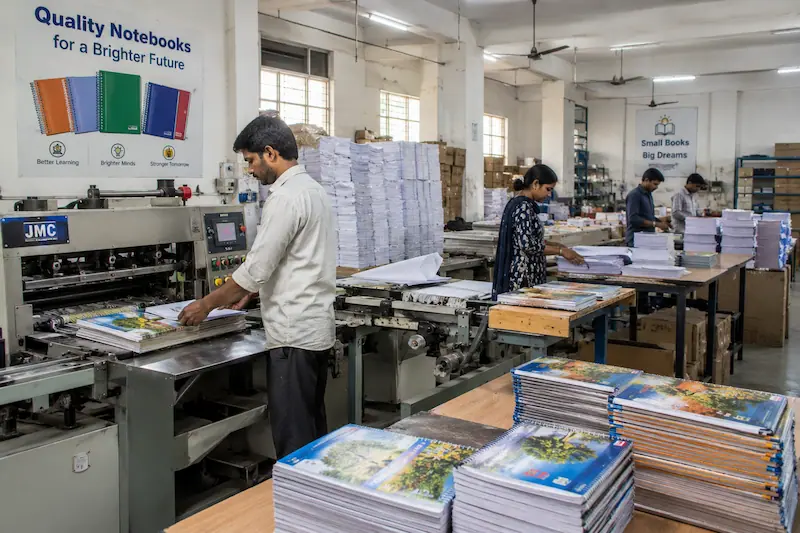
1. Market Demand & Business Viability
2. Itemized Startup Cost Breakdown
Every line item is audited against verified vendor quotes and realistic fit-out averages.
| Cost Head & Item | Min (₹) | Typical (₹) | Max (₹) | Allocation Notes |
|---|---|---|---|---|
| Machinery & Equipment | ||||
|
Basic Manual Paper Cutting and Finishing Tools
|
₹8,000 | ₹35,000 | ₹1,40,000 | 1.00 setup • Micro units can use manual cutting tools and outsource precision cutting. Commercial units may upgrade to semi-automatic or hydraulic cutting equipment. |
|
Notebook Stitching Machine
|
₹0 | ₹65,000 | ₹85,000 | 1.00 unit • Optional at micro scale when stitching is outsourced. Current supplier references are around ₹48,000–₹65,000 for basic notebook stitching machines, with model-specific variation. |
|
Paper Ruling Machine
|
₹0 | ₹53,000 | ₹1,70,000 | 1.00 unit • Optional when pre-ruled paper is purchased. A current supplier listing shows an indicative price of ₹53,000, while more capable ruling systems can cost materially more. |
|
Hydraulic or Heavy-Duty Edge Squaring Equipment
|
₹0 | ₹1,40,000 | ₹2,25,000 | 1.00 unit • Useful for cleaner commercial finishing but not required for a micro operation. Integrated notebook machines may already include equivalent finishing functions. |
|
Semi-Automatic Notebook Making Machine
|
₹0 | ₹2,50,000 | ₹5,00,000 | 1.00 unit • Optional scale-up equipment. Current market listings show several semi-automatic models in roughly the ₹1.35 lakh–₹4.05 lakh range, with larger configurations higher. |
|
Large Integrated Production Line Reserve
|
₹0 | ₹0 | ₹15,00,000 | 1.00 reserve • For organised plants the actual machine package can exceed the base-machine ranges after adding multiple cutting, ruling, binding, pressing, packing and backup machines. This is intentionally shown as a large-scale reserve rather than a mandatory startup expense. |
| Premises & Advance Deposit | ||||
|
Premises Deposit and Basic Workspace Fit-Out
|
₹5,000 | ₹50,000 | ₹3,00,000 | 1.00 setup • The micro route can use existing legally permitted space. Commercial units need a working area, storage racks, worktables, lighting and basic safety arrangements. |
| Interior Setup & Furnishing | ||||
|
Electrical Installation, Wiring and Machine Commissioning
|
₹2,000 | ₹20,000 | ₹1,00,000 | 1.00 setup • Micro units may operate with existing single-phase supply where equipment permits. Commercial machinery can require dedicated circuits or higher sanctioned load. |
| Licensing & Registrations | ||||
|
Business Registration, Documentation and Initial Professional Fees
|
₹2,000 | ₹10,000 | ₹30,000 | 1.00 package • Actual statutory costs depend on entity structure and location. Udyam registration itself is free on the official portal; professional assistance may still cost extra. |
| Initial Raw Materials & Inventory | ||||
|
Initial Paper, Cover, Binding Material and Packaging Stock
|
₹15,000 | ₹90,000 | ₹5,00,000 | 1.00 batch • Initial inventory varies strongly by GSM, notebook size, page count, cover quality, printing and order commitment. Buying pre-ruled/cut material lowers equipment needs but may affect unit cost. |
|
Working Capital and Receivables Buffer
|
₹10,000 | ₹1,00,000 | ₹3,00,000 | 1.00 buffer • Separate working capital from machinery. Cover paper replenishment, packaging, wages, transport and short B2B credit periods. |
| Total Setup Investment | ₹42,000 | ₹8,13,000 | ₹38,50,000 | |
3. Plant Machinery & Equipment Catalog
| Machine / Tool Asset | Required Qty | Estimated Unit Price | Commercial Specs & Power |
|---|---|---|---|
| Automatic Notebook Making Machine | 1 unit | ₹5,00,000 | Large-scale option. Current listings include integrated models around ₹5.75 lakh, but supplier capacity claims should be validated by production trial and should never be treated as guaranteed sales output. |
| Book Press and Notebook Finishing Press | 1 unit | ₹40,000 | Finishing support. Useful for consistent compression and alignment but not universally mandatory for home-scale production. |
| Hydraulic Edge Squaring Machine | 1 unit | ₹1,75,000 | Commercial finishing option. Do not purchase if the selected integrated line already provides equivalent edge finishing. |
| Manual Paper Cutting and Finishing Tools | 1 setup | ₹35,000 | Micro entry equipment. Precision commercial cutting can be outsourced until order volume justifies a dedicated machine. |
| Notebook Stitching Machine | 1 unit | ₹65,000 | Optional at micro scale because stitching can be job-worked. Becomes useful when repeat volume is established. |
| Paper Ruling Machine | 1 unit | ₹1,10,000 | Optional where pre-ruled paper is purchased. Add when ruling volume and control over GSM/line format justify internal production. |
| Semi-Automatic Notebook Making Machine | 1 unit | ₹3,27,800 | Scale-up machine. Select one configuration based on actual required functions and verify live throughput, installation and service support before purchase. |
4. Space, Power & Utilities
Minimum required footprint for machinery layout, raw material inventory storage, and dispatch.
Commercial power load with dedicated sub-meter and industrial earthing connection.
Adequate municipal utility inlet and local commercial/industrial zoning compliance.
5. Monthly Operating Expenses (OPEX)
Recurring operational commitments required every month to sustain full production.
| Expense Category & Head | Min / Mo | Typical / Mo | Max / Mo | Operational Notes |
|---|---|---|---|---|
| Workspace Rent Commercial Rent | ₹0 | ₹18,000 | ₹60,000 | Micro operators using owned or existing permitted space can avoid rent. Commercial rent varies heavily by city and locality. |
| Electricity and Power Staff Salaries & Wages | ₹1,000 | ₹12,000 | ₹35,000 | Depends on ruling, cutting, stitching, lighting and machine utilisation. Do not assume three-phase power for the micro model. |
| Production Labour and Helpers Electricity & Commercial Utilities | ₹0 | ₹55,000 | ₹1,80,000 | Owner-operated micro units can keep payroll low. Commercial operations may need cutters, stitchers, finishers, packers, supervisor and sales support. |
| Paper, Cover and Binding Material Consumption Electricity & Commercial Utilities | ₹0 | ₹0 | ₹0 | This is modelled as variable COGS in the revenue simulator rather than a fixed monthly overhead so the calculator can scale with output. |
| Transport and Local Delivery Monthly Raw Materials | ₹3,000 | ₹12,000 | ₹40,000 | Outsource transport at low volume; add fixed routes or a dedicated vehicle only when dispatch volume supports it. |
| Marketing, Samples and Sales Visits Monthly Raw Materials | ₹2,000 | ₹8,000 | ₹30,000 | Use local samples, distributor visits, WhatsApp catalogues, school procurement meetings and private-label sample books. |
| Administrative, Accounting and Communication Monthly Raw Materials | ₹1,000 | ₹5,000 | ₹20,000 | Includes bookkeeping, phone, software and routine office costs; actual professional fees depend on structure and location. |
| Machine Maintenance and Consumables Packaging Materials | ₹1,000 | ₹7,000 | ₹25,000 | Higher for automated or heavily utilised equipment. Include blades, needles, lubrication and routine service. |
| Quality Control, Wastage and Rework Reserve Packaging Materials | ₹1,000 | ₹7,000 | ₹25,000 | A notebook unit should budget for paper trim, damaged covers, stitching defects, rejected bundles and rework instead of assuming zero wastage. |
| Total Monthly Overheads | ₹9,000 | ₹1,24,000 | ₹4,15,000 |
6. Revenue Model, Profit Margin & Break-Even
Fixed monthly overheads (₹1,24,000) are 100% covered at 21,528 finished notebooks per working day/month. Estimated capital payback timeline: 14.6 months.
7. Licences, Registrations & Compliance
Udyam MSME Registration
Free online government registration. Required to access bank priority lending, PMEGP subsidies, and delayed payment dispute resolution.
GST Registration
Mandatory if annual turnover exceeds ₹40 Lakhs (goods) or ₹20 Lakhs (services). Enables input tax credit on commercial machinery purchases.
Shop & Commercial Establishment Licence
Issued by local municipal corporation / panchayat authority for commercial premises operation and labor compliance.
Commercial Bank Current Account
Dedicated current account under business legal entity name along with trade PAN and UPI merchant QR.
8. Operational Skills Required
Paper GSM and yield calculation, cutting, ruling, folding, stitching, pressing, cover alignment, quality inspection, basic costing, purchase negotiation, B2B selling, order planning and inventory control.
9. Customer Acquisition Strategy
Build a school and stationery-wholesaler sample kit; approach local distributors with 3–5 price-quality grades; offer private-label cover printing through partner printers; pitch institutional yearly supply before the school season; maintain a WhatsApp catalogue; collect repeat-order data by size, page count and paper GSM; use minimum-order quantities for customised covers.
10. Interactive Profit & Expense Simulator
Adjust customer ticket sizes, daily footfall, and fixed overheads to see real-time net returns.
Adjust Financial Assumptions
Slide or type direct valuesSimulation Output
Mathematical Precision11. Founder Profile Suitability
Highly Recommended If:
Best suited for entrepreneurs who can sell repeatedly to stationery wholesalers, schools, coaching centres, offices, printers, distributors or private-label buyers and who are willing to manage procurement, quality and working capital. A micro entrepreneur can start asset-light; a larger operator can add automation after demand is proven.
Not Ideal If:
Not ideal for founders who expect high margins without distribution, who want to buy a large automatic machine before securing customers, or who have insufficient cash to carry paper inventory and short-term B2B receivables.
12. Operational Risks & Mitigation Strategy
The biggest risks are paper-price volatility, low selling prices in commodity school notebooks, unsold seasonal inventory, delayed B2B payments, binding defects, cover-printing mistakes, inconsistent paper GSM, excessive machine idle time and buying automation before reaching sufficient utilisation. Mitigation is to keep multiple paper suppliers, quote customers with validity periods, maintain strict GSM and size checks, use batch inspection, limit long credit periods, outsource non-core processes at low volume and invest in machinery only against repeat demand. Do not model profit from machine capacity alone.
13. Step-by-Step 90-Day Launch Plan
Feasibility & Premises Lease
Finalize commercial space lease agreement, verify power load capacity, and apply for Udyam MSME certification.
Machinery Procurement & Fit-Out
Order plant machinery, complete electrical/plumbing fit-out, and setup commercial bank current account.
Trial Runs, Hiring & Licences
Install and calibrate equipment, conduct staff SOP training, and secure local municipal trade licenses.
Soft Launch & Marketing Kickoff
Initiate neighborhood promotional campaigns, setup Google Business listing, and commence commercial operations.
14. Similar Business Opportunities
Explore audited business blueprints in related sectors & investment ranges.
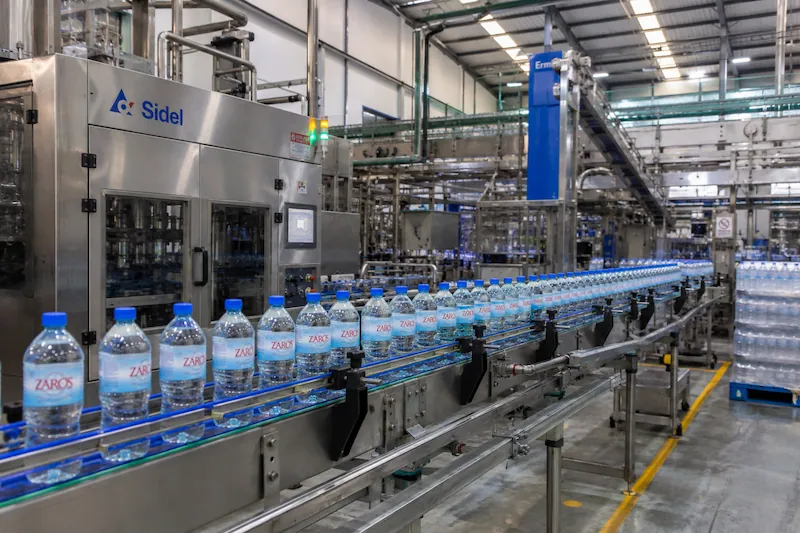
Packaged Drinking Water Bottle Manufacturing Plant
Comprehensive business blueprint for setting up a 2000 LPH BIS/ISI certified packaged drinking water unit, automated 20-liter jar packaging, and PET bottle bottling line.
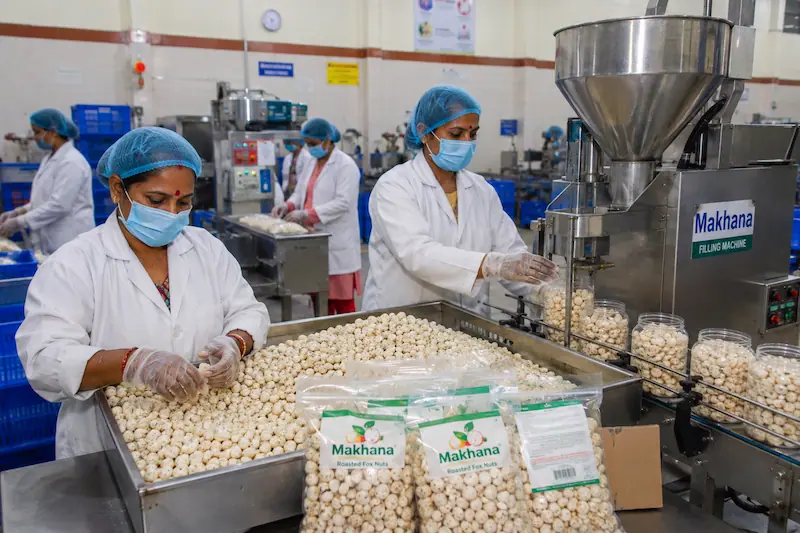
Makhana Processing Business
Start a makhana business at the scale that fits your capital, from a low-cost home-based roasted and packed model to a commercial processing unit with grading, roasting, flavouring and automated packing.
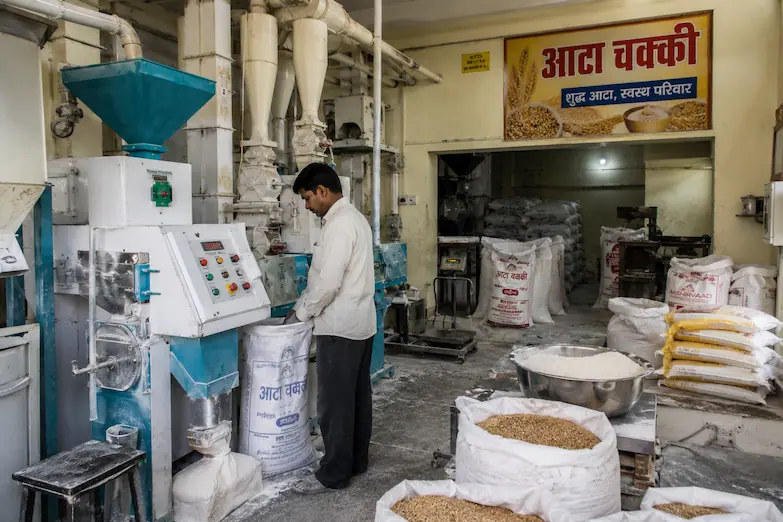
Atta Chakki Flour Mill Business
Start an atta chakki business from a compact customer-grinding shop with a relatively low entry cost, or scale into a commercial flour mill serving households, retailers, restaurants and institutional buyers.
15. Data Verification & Methodology
This business profile was audited on 28 Aug 2026 with a data confidence score of 91%.
Equipment pricing and operational assumptions are cross-referenced with Indian industrial machinery suppliers, commercial lease indices, and official Ministry guidelines.
16. Frequently Asked Questions
A genuine micro entry can be planned around ₹40,000–₹75,000 when the entrepreneur already has suitable space and outsources ruling, precision cutting or stitching. This is not a full factory. A more practical small commercial unit generally requires several lakh rupees once equipment, opening material and working capital are included.
Yes, on a micro scale, subject to local rules, premises suitability and nuisance or safety restrictions. The lowest-risk home route is to buy paper and covers, outsource specialist processes, perform assembly, quality checking and packing in an organised workspace, and move into a commercial unit after repeat orders justify it.
No single machine is universally mandatory. At micro scale, manual tools and outsourcing can be enough. Stitching becomes useful with repeat volume. Ruling is optional if pre-ruled paper is purchased. Edge squaring and integrated notebook-making machinery become attractive when output, consistency and labour savings justify the capital.
Current supplier listings checked for this profile put basic notebook stitching machines broadly around ₹48,000–₹65,000, with other configurations higher. Final cost depends on model, capacity, delivery, installation, GST and negotiated terms.
A current supplier listing shows an indicative price around ₹53,000 for an iron paper ruling machine. Higher-capacity and more automated models can cost much more. Buying pre-ruled paper is often the cheaper choice for a small entrepreneur until ruling volume is high enough.
The core inputs are writing paper, cover board or printed cover stock, stitching wire or binding materials depending on the format, adhesive where applicable, wrappers or shrink packaging, labels and cartons. Paper GSM and size materially affect unit economics. Procurement should be based on actual notebook specifications rather than buying the cheapest paper available.
Profit depends mainly on utilisation, realised selling price, paper procurement cost, wastage, labour productivity and customer credit. In the base model here, 1,200 notebooks per day at ₹18 realised selling price produces about ₹5.62 lakh monthly revenue and roughly ₹65,000 calculated operating surplus before finance cost, depreciation, tax and owner remuneration. A lower utilisation or lower selling price can push the business toward break-even or loss.
Using the base-case assumption of ₹18 selling price and 68% variable cost, the contribution is ₹5.76 per notebook. With fixed monthly overhead of about ₹1.15 lakh, calculated break-even is approximately 20,000 notebooks per month, or around 770 notebooks per working day over 26 days. This is a planning calculation, not a guarantee.
For products covered by the relevant HSN 4820 notebook description, the revised GST rate notification effective 22 September 2025 moved exercise books, graph books, laboratory notebooks and notebooks into the 5% schedule. Businesses should classify their exact product correctly because other stationery under HSN 4820 can have different treatment.
Udyam Registration is the official MSME registration system and is useful for formalising the enterprise and accessing MSME-related benefits where eligible. The official portal states that registration is free and paperless. It is not correct to describe Udyam as a paid mandatory licence. The current MSME classification from 1 April 2025 uses both investment and turnover thresholds.
An eligible new manufacturing enterprise may be considered under PMEGP subject to the scheme rules, project appraisal and bank sanction. The revised official guidelines provide a manufacturing project-cost ceiling of ₹50 lakh for margin-money subsidy. General-category subsidy is 15% urban and 25% rural; eligible special-category subsidy is 25% urban and 35% rural, subject to conditions. The project should not be budgeted on the assumption that the subsidy will be approved automatically.
CGTMSE does not directly lend money. It provides guarantee support through eligible member lending institutions for eligible credit facilities. The current principal guarantee ceiling can extend up to ₹10 crore for eligible MSE facilities, subject to the scheme and lender conditions. Bank appraisal and project viability still matter.
A micro assembly and packing operation can fit into roughly 80–250 sq.ft if stock is tightly controlled. A small workshop commonly needs around 300–800 sq.ft. A semi-commercial setup may use roughly 800–1,500 sq.ft, while a larger organised plant may require several thousand square feet for machine clearance, paper storage, finished goods and dispatch. Space should be sized from workflow, not just machine footprint.
Usually not unless you already have reliable purchase orders that can keep the machine utilised. Current listings show integrated notebook machines around ₹5.75 lakh and other models in the ₹1.35 lakh–₹6.5 lakh range. A machine that can physically produce thousands of notebooks a day does not create demand. Secure repeat buyers first, then compare outsourced unit cost against machine ownership cost.
The strongest target customers are stationery wholesalers, regional distributors, school suppliers, coaching centres, offices, printers, corporate procurement teams and private-label stationery brands. Direct retail can be added, but a small manufacturer often benefits more from repeat B2B orders than from trying to compete for every retail consumer.
The biggest risk is not machinery breakdown alone. It is low utilisation combined with paper inventory and delayed customer payments. A factory can look efficient on paper and still lose money if notebooks are produced without confirmed demand, discounts are too aggressive, or working capital is locked in slow-moving stock. Use confirmed or repeat demand to schedule production.