
Mini Rice Mill Business
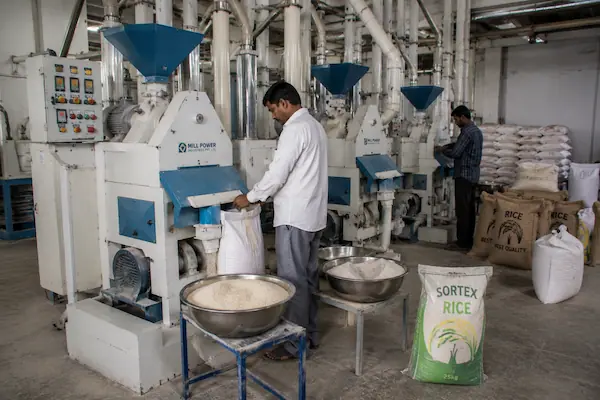
Start a mini rice mill for custom paddy milling or build a small commercial rice-processing operation with hulling, polishing, grading and packing as production volume grows.
1. Market Demand & Business Viability
2. Itemized Startup Cost Breakdown
Every line item is audited against verified vendor quotes and realistic fit-out averages.
| Cost Head & Item | Min (₹) | Typical (₹) | Max (₹) | Allocation Notes |
|---|---|---|---|---|
| Machinery & Equipment | ||||
|
Compact 100-200 kg/hour Mini Rice Mill
|
₹22,000 | ₹37,000 | ₹75,000 | 1.00 unit • Current Indian listings show 100-200 kg/hour mini rice mills around ₹22,000 to ₹37,000. A separate 200 kg/hour machine is listed around ₹75,000 depending on configuration. |
|
Weighing Scale, Bags and Handling Equipment
|
₹5,000 | ₹15,000 | ₹50,000 | 1.00 set • Includes platform or digital weighing, bags, scoops, grain containers and material-handling accessories. |
|
Paddy Cleaning and Destoning Equipment
|
₹0 | ₹30,000 | ₹1,50,000 | 1.00 set • Very small operators may buy pre-cleaned paddy or use manual cleaning. Mechanical pre-cleaning becomes more useful as paddy volume increases. |
|
Rice Polisher and Grader Upgrade
|
₹15,000 | ₹60,000 | ₹2,00,000 | 1.00 set • Required when the selected mini mill does not already include adequate polishing and grading. Product quality and selling market determine the need. |
|
400-500 kg/hour Mini Rice Mill System
|
₹1,05,000 | ₹1,90,000 | ₹2,50,000 | 1.00 system • Current market listings show 400-850 kg/hour mini systems around ₹1.05 lakh to ₹1.90 lakh. MoFPI cost norms give ₹2.50 lakh for a 400-500 kg/hour mini rice mill configuration including single-pass rice mill, husker, polisher, weighing balance and sealing machine. |
|
500 kg/hour Mini Rice Mill Plant
|
₹2,00,000 | ₹2,95,000 | ₹4,00,000 | 1.00 plant • One current Indian plant listing shows about ₹2.95 lakh for a 500 kg/hour mini rice mill with more than 10 HP and three-phase connection. Plant contents vary by supplier. |
|
Paddy Storage, Rice Storage and Husk Handling Setup
|
₹10,000 | ₹50,000 | ₹2,50,000 | 1.00 setup • Includes bins, pallets, sacks, temporary storage and space for husk and bran. Storage requirement rises rapidly for own-account milling. |
| Premises & Advance Deposit | ||||
|
Small Commercial Shed and Flooring
|
₹25,000 | ₹1,00,000 | ₹4,00,000 | 1.00 setup • Existing suitable premises can reduce this cost. MoFPI cost norms use approximately 600 sq ft land requirement for a 400-500 kg/hour mini rice mill configuration. |
| Interior Setup & Furnishing | ||||
|
Electrical Installation and Three-Phase Connection
|
₹3,000 | ₹25,000 | ₹1,00,000 | 1.00 setup • Small 100-200 kg/hour machines are available with single-phase configurations. Larger 400-800 kg/hour systems may require higher power and three-phase arrangements. |
| Licensing & Registrations | ||||
|
Business Registration and Applicable Food Compliance
|
₹100 | ₹5,000 | ₹30,000 | 1.00 package • FSSAI treats grain, cereal and pulse milling as a food-processing activity. Current FoSCoS criteria show petty registration for eligible businesses up to 100 kg/day or ₹12 lakh turnover, while milling units above 100 kg/day fall into licensing categories. Udyam registration is free. |
| Initial Raw Materials & Inventory | ||||
|
Initial Paddy, Packaging and Operating Working Capital
|
₹15,000 | ₹1,00,000 | ₹5,00,000 | 1.00 working-capital • Custom milling needs relatively little paddy inventory because the customer supplies the grain. Own-account milling requires materially more money because paddy must be purchased before rice sales are collected. |
| Total Setup Investment | ₹4,00,100 | ₹9,07,000 | ₹24,05,000 | |
3. Plant Machinery & Equipment Catalog
| Machine / Tool Asset | Required Qty | Estimated Unit Price | Commercial Specs & Power |
|---|---|---|---|
| 100-200 kg/hour Mini Rice Mill | 1 unit | ₹37,000 | Starter milling machine for low-volume paddy processing |
| 400-500 kg/hour Mini Rice Mill | 1 system | ₹1,90,000 | Higher-throughput mini mill configuration |
| 500 kg/hour Mini Rice Mill Plant | 1 plant | ₹2,95,000 | Larger mini-plant reference for commercial throughput |
| Paddy Cleaner and Destoner | 1 unit | ₹60,000 | Useful when paddy is purchased in larger lots and requires cleaning before milling |
| Rice Polisher and Grader | 1 set | ₹75,000 | Use when the selected mill does not provide adequate polishing and grading |
| Rice Weighing and Bag Sealing Set | 1 set | ₹10,000 | Required for weighing and dispatching milled rice |
4. Space, Power & Utilities
Minimum required footprint for machinery layout, raw material inventory storage, and dispatch.
Commercial power load with dedicated sub-meter and industrial earthing connection.
Adequate municipal utility inlet and local commercial/industrial zoning compliance.
5. Monthly Operating Expenses (OPEX)
Recurring operational commitments required every month to sustain full production.
| Expense Category & Head | Min / Mo | Typical / Mo | Max / Mo | Operational Notes |
|---|---|---|---|---|
| Shed or Mill Premises Rent Commercial Rent | ₹0 | ₹10,000 | ₹40,000 | Owned premises can reduce fixed cost. Commercial rent varies by paddy-growing region and market location. |
| Electricity and Processing Power Staff Salaries & Wages | ₹1,000 | ₹6,000 | ₹30,000 | Small 100-200 kg/hour machines can have relatively low electrical demand. Larger 400-800 kg/hour systems often require three-phase power. |
| Labour and Material Handling Electricity & Commercial Utilities | ₹0 | ₹18,000 | ₹75,000 | Owner-operated micro mills can keep labour low. Larger operations need loading, unloading, milling and packing assistance. |
| Paddy and Rice Transport Monthly Raw Materials | ₹1,000 | ₹6,000 | ₹30,000 | Depends on distance from farmers, mandis, traders and buyers. |
| Machine Maintenance and Consumables Packaging Materials | ₹500 | ₹4,000 | ₹20,000 | Includes belts, bearings, rubber rolls, screens, lubrication and minor repairs. |
| Bags, Packaging and Weighing Materials Packaging Materials | ₹500 | ₹5,000 | ₹30,000 | Custom milling uses fewer packaging materials; own-brand rice requires substantially more. |
| Cleaning, Sanitation and Pest Control Logistics & Delivery | ₹500 | ₹2,500 | ₹10,000 | Includes cleaning materials and basic pest-control measures for grain handling areas. |
| Accounting and Administrative Cost Logistics & Delivery | ₹500 | ₹3,000 | ₹10,000 | Bookkeeping and applicable administrative costs. |
| Total Monthly Overheads | ₹4,000 | ₹54,500 | ₹2,45,000 |
6. Revenue Model, Profit Margin & Break-Even
Fixed monthly overheads (₹54,500) are 100% covered at 16,616 kg paddy custom milled/month. Estimated capital payback timeline: 0 months.
7. Applicable Government Schemes & Subsidies
Government assistance programs and capital subsidies mapped for this enterprise.
Prime Minister's Employment Generation Programme (PMEGP)
PMEGP is a credit-linked subsidy scheme for setting up new micro-enterprises in the non-farm sector. Eligible applicants can receive margin money subsidy ranging from 15% to 35%, with maximum project cost of ₹50 lakh for manufacturing and ₹20 lakh for service/business activities.
Check Scheme Guidelines →8. Licences, Registrations & Compliance
Udyam MSME Registration
Free online government registration. Required to access bank priority lending, PMEGP subsidies, and delayed payment dispute resolution.
GST Registration
Mandatory if annual turnover exceeds ₹40 Lakhs (goods) or ₹20 Lakhs (services). Enables input tax credit on commercial machinery purchases.
Shop & Commercial Establishment Licence
Issued by local municipal corporation / panchayat authority for commercial premises operation and labor compliance.
Commercial Bank Current Account
Dedicated current account under business legal entity name along with trade PAN and UPI merchant QR.
9. Operational Skills Required
Paddy quality assessment, machine operation, moisture management, cleaning, hulling, polishing, grading, weighing, bag handling, basic maintenance, yield measurement, inventory control and buyer management.
10. Customer Acquisition Strategy
Start close to paddy-producing villages, mandis or farmer clusters. For custom milling, build relationships with farmers, aggregators and local traders. For own-account rice, sell to wholesalers, kirana distributors, local retailers and institutions where practical. Compete on recovery, cleanliness, service speed, accurate weight and reliable settlement rather than only on price.
11. Interactive Profit & Expense Simulator
Adjust customer ticket sizes, daily footfall, and fixed overheads to see real-time net returns.
Adjust Financial Assumptions
Slide or type direct valuesSimulation Output
Mathematical Precision12. Founder Profile Suitability
Highly Recommended If:
Suitable for farmers, rural entrepreneurs, mandi-area businesses, agricultural families, custom milling operators, small rice traders and food-processing entrepreneurs with access to paddy-producing regions and local rice buyers.
Not Ideal If:
Not ideal when paddy supply is far away, local milling demand is too low, electricity is unreliable, the site cannot accommodate paddy bags and husk, or the entrepreneur wants to hold large paddy inventory without sufficient working capital.
13. Operational Risks & Mitigation Strategy
Major risks include paddy moisture variation, poor grain quality, high broken-rice percentage, low milling recovery, machine wear, rubber-roll replacement, power interruptions, paddy-price changes, rice-price changes, blocked inventory, inadequate storage and weak buyer credit control. Measure incoming paddy quality, maintain the mill, record recovery and broken percentage, store paddy properly, keep working capital under control and avoid buying large volumes before confirming the sales route.
14. Step-by-Step 90-Day Launch Plan
Feasibility & Premises Lease
Finalize commercial space lease agreement, verify power load capacity, and apply for Udyam MSME certification.
Machinery Procurement & Fit-Out
Order plant machinery, complete electrical/plumbing fit-out, and setup commercial bank current account.
Trial Runs, Hiring & Licences
Install and calibrate equipment, conduct staff SOP training, and secure local municipal trade licenses.
Soft Launch & Marketing Kickoff
Initiate neighborhood promotional campaigns, setup Google Business listing, and commence commercial operations.
15. Similar Business Opportunities
Explore audited business blueprints in related sectors & investment ranges.
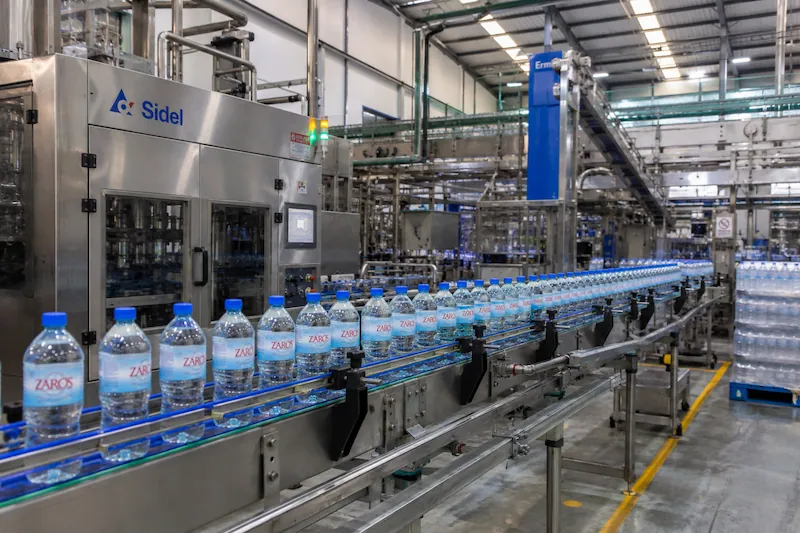
Packaged Drinking Water Bottle Manufacturing Plant
Comprehensive business blueprint for setting up a 2000 LPH BIS/ISI certified packaged drinking water unit, automated 20-liter jar packaging, and PET bottle bottling line.
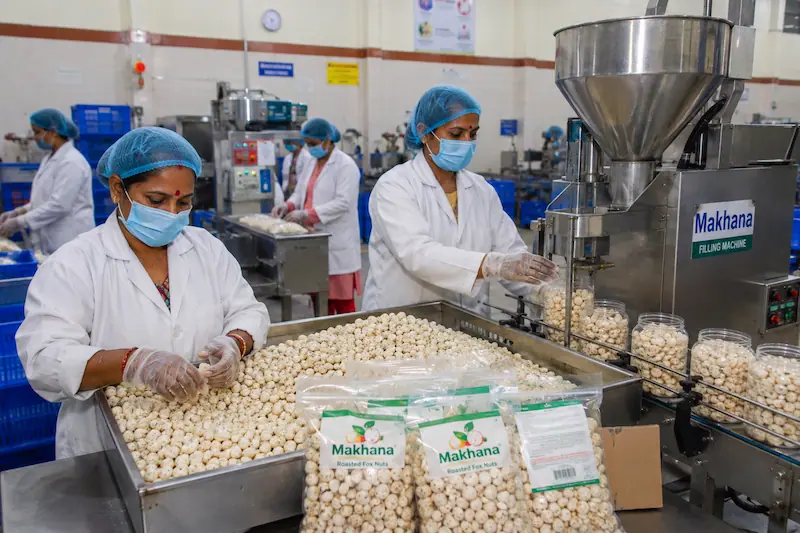
Makhana Processing Business
Start a makhana business at the scale that fits your capital, from a low-cost home-based roasted and packed model to a commercial processing unit with grading, roasting, flavouring and automated packing.
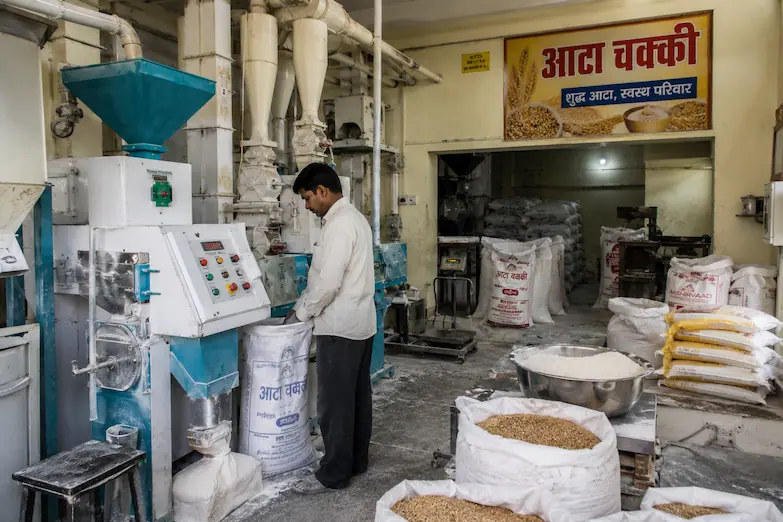
Atta Chakki Flour Mill Business
Start an atta chakki business from a compact customer-grinding shop with a relatively low entry cost, or scale into a commercial flour mill serving households, retailers, restaurants and institutional buyers.
16. Data Verification & Methodology
This business profile was audited on 01 Sep 2026 with a data confidence score of 96%.
Equipment pricing and operational assumptions are cross-referenced with Indian industrial machinery suppliers, commercial lease indices, and official Ministry guidelines.
17. Frequently Asked Questions
Yes. Current Indian listings show 100-200 kg/hour mini rice mills around ₹22,000 to ₹37,000, although the total business investment is higher after weighing equipment, electrical work, storage and working capital. A micro operator can also reduce working capital by offering custom paddy milling instead of buying paddy for resale.
A very small operation can be planned around ₹50,000 to ₹1.25 lakh when an existing suitable shed is available and a compact 100-200 kg/hour machine is used. A more complete small commercial setup can move into roughly ₹1.5 lakh to ₹4 lakh. MoFPI cost norms provide ₹2.50 lakh as a benchmark for a structured 400-500 kg/hour mini rice mill configuration.
Current listings vary widely by capacity and configuration. A 100-200 kg/hour machine is listed around ₹22,000 to ₹37,000 in current references. A 200 kg/hour machine is listed around ₹75,000 in another current reference. A 400-850 kg/hour mini system is listed around ₹1.05 lakh to ₹1.90 lakh, while a 500 kg/hour plant example is around ₹2.95 lakh. Compare included equipment, motor, power, huller, polisher, grader and warranty before comparing prices.
Space depends on the machine and especially on paddy storage. MoFPI cost norms specify about 600 sq ft land requirement for a 400-500 kg/hour mini rice mill configuration and about 800 sq ft for a 700-800 kg/hour configuration. A micro 100-200 kg/hour unit can operate in a smaller footprint if paddy inventory is very limited, but the machine area alone is not the total required business area.
Small 100-200 kg/hour machines are available with 3 HP-class motors and single-phase 220 V configurations. Larger 400-800 kg/hour systems can require substantially more power and often use three-phase electricity. One current 500 kg/hour plant listing specifies more than 10 HP and three-phase connection. Final sanctioned load should be based on the selected machine nameplates and all supporting equipment.
There is no single minimum stock requirement. Custom-milling mills can operate with very little owned paddy because customers supply the grain. Own-account mills need enough inventory to keep the machine operating between procurement and sales cycles. The correct stock level depends on daily throughput, procurement frequency, storage capacity, payment terms and local paddy availability.
The Department of Food and Public Distribution lists the 2025-26 MSP at ₹2,369 per quintal for common paddy and ₹2,389 per quintal for Grade A paddy. This is a government MSP benchmark and should not be treated as the actual purchase price in every local market.
Recovery depends on paddy variety, moisture, quality, milling technology and operator control. IRRI reports potential milling recovery around 68-72% under optimum laboratory conditions, compact rice mills above 60% and modern multi-stage mills around 65-70%. Actual commercial recovery can be lower or vary by crop and machine.
In custom milling, farmers or traders provide paddy and pay for processing. The mill earns a service charge and carries much less paddy-price and inventory risk. In own-account milling, the operator buys paddy, processes it, owns the rice inventory and sells rice and by-products. That model can create more trading upside but requires substantially more working capital and exposes the business to paddy and rice price movements.
It can be profitable, but profit is not guaranteed. Custom milling profitability depends mainly on daily throughput, local milling charge, electricity, labour and machine utilisation. Own-account profitability also depends on paddy procurement price, rice recovery, rice selling price, broken rice, bran and husk realisation and working-capital cost. Calculate profit per tonne of paddy from actual local figures rather than using a generic percentage.
Not always. Some mini rice mills already combine hulling, separation and polishing. If the selected machine does not provide the required rice finish or grading, a separate polisher or grader may be useful. Product quality requirements and buyer expectations should determine the purchase.
FSSAI treats grain, cereal and pulse milling as food processing. Current FoSCoS eligibility information states that petty food businesses up to 100 kg/day or ₹12 lakh annual turnover can fall under registration, while grain, cereal and pulse milling units above 100 kg/day fall under licensing categories. The exact licence and fee should be confirmed through FoSCoS for the actual production capacity and business structure.
PMFME supports eligible micro food-processing enterprises subject to scheme conditions, applicant eligibility and current implementation rules. The official PMFME portal states that eligible individual micro food-processing units can receive a 35% credit-linked capital subsidy on eligible project cost up to a maximum of ₹10 lakh. Applications remain subject to the scheme and bank requirements.
Start with a machine that matches confirmed local demand. Custom milling can validate throughput without tying up large amounts of money in paddy. Once utilisation becomes stable, add cleaning, better polishing, grading, packing and storage. Move into own-account paddy procurement only when working capital, storage and buyer relationships are strong enough to carry the inventory risk.
Yes, and location can be a major advantage when the mill is close to paddy-growing villages, local mandis and farmers. Lower transport distance can improve the economics. The site must still have appropriate access for paddy bags, finished rice dispatch, electricity, water and by-product handling.