CBIC preparing a simpler GST registration framework for small online sellers
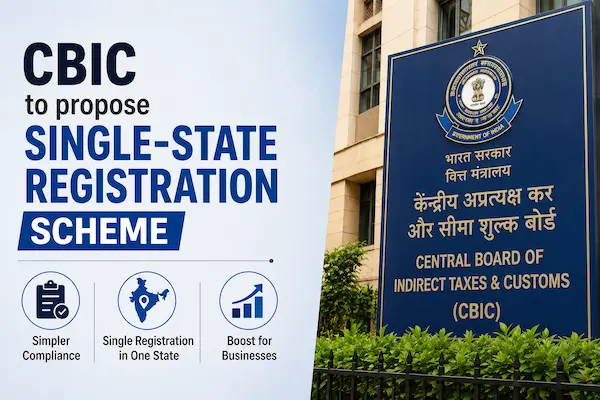
The Central Board of Indirect Taxes and Customs is preparing a proposal that could significantly simplify GST compliance for small suppliers selling goods through e commerce platforms across multiple states.
According to recent reporting, the proposed framework would allow eligible small suppliers to operate with a GST registration in one state instead of requiring separate registrations in every state where their goods are stocked or sold through an electronic commerce operator.
The proposal is expected to be placed before the GST Council for consideration at its meeting scheduled for September 12, 2026. The framework is not yet a final GST rule and its detailed conditions, eligibility criteria and implementation mechanism are still to be approved.
Why small online sellers currently face multiple GST registrations
Under the present GST structure, a supplier may need registration in different states when business operations or stock arrangements create taxable presence across those states.
This can become difficult for small online businesses that sell through large e commerce platforms. A seller may manage inventory, accounts and business operations from one main location while goods are stored in warehouses operated by an e commerce company in several states.
The requirement to maintain multiple registrations can increase compliance work, documentation requirements, return filing responsibilities and interaction with tax authorities.
Proposed scheme could allow one GST registration
The proposed mechanism is aimed at small suppliers using electronic commerce operators to reach customers in multiple states.
Under the framework being examined, a supplier could retain GST registration in one state while warehouses of an e commerce operator may be treated as the suppliers place of business in other relevant states for the purpose of the simplified mechanism.
The exact legal treatment, state level administration and compliance responsibilities will depend on the final framework approved by the GST Council.
Who is expected to benefit?
The proposed facility is expected to target micro and small suppliers selling through e commerce platforms rather than large companies with significant physical infrastructure.
A threshold or eligibility condition is expected to be prescribed. The exact turnover or business threshold has not been announced in the current reporting.
Therefore, businesses should not assume that every multi state seller will automatically qualify for a single registration under the proposed system.
Why the reform could matter for MSMEs
For a small online seller, maintaining GST registrations across several states can add administrative costs even when the core business is managed from one location.
A simplified registration framework could reduce repetitive compliance requirements and make it easier for smaller businesses to expand their customer base through national e commerce platforms.
The potential benefit is particularly relevant for micro businesses that want to sell outside their home state without establishing separate physical operations in every market.
E commerce warehouses are at the centre of the proposal
One of the key ideas being examined is the treatment of an e commerce operators warehouse as the suppliers place of business in the relevant state.
This approach is intended to address a practical problem faced by online sellers. Products may be physically stored in fulfilment or warehouse facilities belonging to an e commerce operator even though the seller does not maintain an independent office or establishment in that state.
If implemented, the proposed mechanism could reduce disputes linked to the principal place of business, physical records and warehouse stock.
GST Council had already approved the concept in principle
The proposed reform is not a completely new idea. In September 2025, the GST Council approved in principle the concept of a simplified GST registration mechanism for small suppliers making supplies through electronic commerce operators across multiple states.
The Council record noted that such suppliers face difficulties in maintaining a principal place of business in each state under the existing GST framework. The detailed modalities were to be developed separately.
The latest CBIC proposal is therefore part of the process of moving that earlier policy concept towards an operational framework.
Input tax credit remains an important issue
Simplifying registration can reduce compliance friction, but the tax credit chain must continue to remain reliable.
E commerce transactions can involve suppliers, warehouses, platform operators and customers located in different states. Correct reporting of outward supplies, tax payments and transaction details is therefore important for the smooth flow of input tax credit.
The final framework will need to balance easier registration for small sellers with effective tax administration and proper reporting.
Will large businesses get the same benefit?
Current reporting indicates that the proposed mechanism is intended for micro suppliers and will not be designed for large companies that can establish their own business infrastructure in multiple states.
However, the final threshold and eligibility rules have not yet been announced. Businesses should therefore wait for the formal notification and detailed rules before determining whether they qualify.
What could change for small online businesses?
If the proposal is approved and implemented, eligible sellers could potentially manage their GST registration through one state while using e commerce warehouses for distribution across multiple states.
This could reduce the need to maintain multiple state registrations and may lower the administrative burden associated with tax filings and state level compliance.
It could also make national expansion easier for small manufacturers, home grown brands and other micro businesses that depend heavily on online marketplaces.
What happens next?
The next major step is consideration of the detailed proposal by the GST Council. The Council will need to examine the operating framework, eligibility conditions, registration process, tax administration and safeguards before the mechanism can become operational.
Until the final framework is notified, existing GST registration requirements continue to apply to businesses according to the prevailing law and rules.
What businesses should do now
Small online sellers should not change their existing GST registration structure solely on the basis of the proposed reform.
Businesses should continue following current GST requirements and wait for the final notification. Sellers using warehouses in multiple states should also maintain accurate stock, invoice and transaction records so that they are ready for any new compliance mechanism.
Key takeaway
CBIC is preparing a proposal to simplify GST registration for eligible small suppliers selling through e commerce operators across multiple states. The proposed framework could allow a single state registration while treating relevant e commerce warehouses as the suppliers place of business for the simplified mechanism.
The concept had already received in principle approval from the GST Council in September 2025. The detailed framework is now expected to move forward through the GST Council process. Until a final decision and notification are issued, existing GST registration rules continue to apply.