
Spice Manufacturing Business
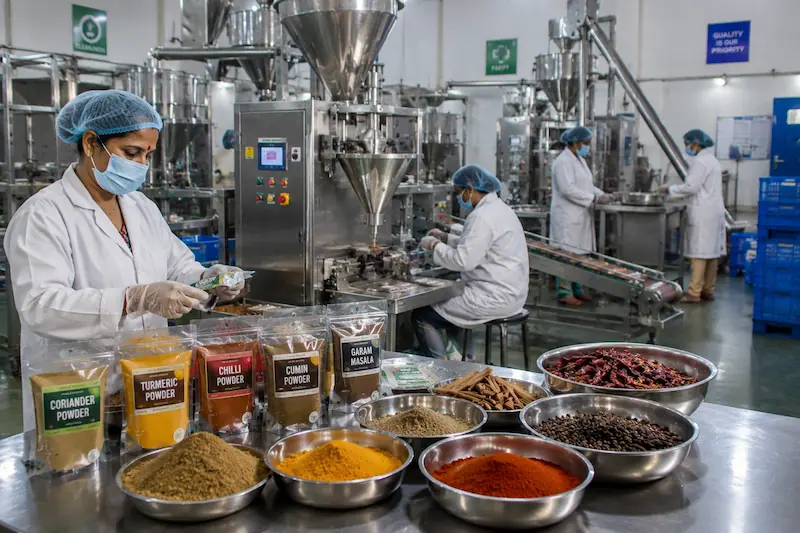
Start a spice business from a compact grinding and packing operation or scale into a commercial masala manufacturing unit with cleaning, grinding, blending and automated packing.
1. Market Demand & Business Viability
2. Itemized Startup Cost Breakdown
Every line item is audited against verified vendor quotes and realistic fit-out averages.
| Cost Head & Item | Min (₹) | Typical (₹) | Max (₹) | Allocation Notes |
|---|---|---|---|---|
| Machinery & Equipment | ||||
|
Basic Food-Safe Workspace and Storage
|
₹3,000 | ₹15,000 | ₹75,000 | 1.00 setup • Suitable clean existing space with work table, food-grade bins, shelves and basic hygiene arrangements. |
|
Digital Weighing and Manual Spice Handling Set
|
₹2,000 | ₹7,000 | ₹20,000 | 1.00 set • Includes weighing scale, sieves, scoops, food-grade tubs and handling tools. |
|
Small Spice Pulverizer
|
₹20,000 | ₹38,000 | ₹80,000 | 1.00 unit • A current Indian supplier reference shows a 3 HP spice pulverizer around ₹38,000 with stated capacity of about 50 kg/hour. Actual throughput depends on spice type, moisture and fineness. |
|
Food-Grade Spice Mixing Equipment
|
₹5,000 | ₹25,000 | ₹1,00,000 | 1.00 unit • Manual mixing can be used at very small scale. Mechanical mixing becomes useful for repeatable blended masala batches. |
|
Spice Sifting and Sieving System
|
₹3,000 | ₹15,000 | ₹1,00,000 | 1.00 set • Manual sieves are enough for micro production. Mechanical sifters become useful as output grows. |
|
5 HP Commercial Spice Pulverizer
|
₹45,000 | ₹59,000 | ₹1,20,000 | 1.00 unit • A current supplier reference lists a 5 HP stainless-steel spice pulverizer at about ₹59,000 with stated capacity of 50 to 60 kg/hour and three-phase power. |
|
Automatic Masala Packing Machine
|
₹75,000 | ₹1,50,000 | ₹3,00,000 | 1.00 unit • Current Indian references show smaller automatic masala packing machines around ₹75,000 and higher-specification machines around ₹2.5 lakh or more depending on filling range, speed and configuration. |
|
10 HP Industrial Masala Grinder with Cyclone
|
₹3,00,000 | ₹4,45,000 | ₹6,00,000 | 1.00 unit • A current Indian listing indicates around ₹4.45 lakh before GST, approximately 100 kg/hour stated capacity, 415 V supply and 9.5 kW stated power consumption. |
|
Commercial Spice Cleaning Machine
|
₹30,000 | ₹2,00,000 | ₹6,50,000 | 1.00 unit • Mechanical cleaning is more relevant when buying large quantities of whole spices. Small units can procure pre-cleaned material from qualified suppliers. |
| Premises & Advance Deposit | ||||
|
Commercial Premises Deposit and Food-Safe Fit-Out
|
₹0 | ₹50,000 | ₹2,50,000 | 1.00 setup • Not required when suitable existing premises are used. Commercial units may need deposit, washable surfaces, drainage, storage and ventilation. |
| Interior Setup & Furnishing | ||||
|
Electrical Wiring, Dust Control and Utility Setup
|
₹3,000 | ₹30,000 | ₹1,50,000 | 1.00 setup • Micro equipment may need limited additional electrical work. Commercial grinders require dedicated wiring and dust-control arrangements. |
| Licensing & Registrations | ||||
|
FSSAI, Udyam and Local Compliance Budget
|
₹100 | ₹5,000 | ₹30,000 | 1.00 package • FSSAI states that food businesses must be licensed or registered. Petty food manufacturers and small or cottage-scale food businesses up to ₹12 lakh annual turnover can use registration, while higher turnover requires a licence under the applicable category. Udyam registration itself is free. |
| Initial Raw Materials & Inventory | ||||
|
Initial Whole-Spice Inventory and Packaging Working Capital
|
₹15,000 | ₹1,00,000 | ₹5,00,000 | 1.00 working-capital-batch • Micro businesses can buy small quantities of a few products. Larger branded businesses need substantially more cash for raw spices, packaging and finished inventory. |
| Total Setup Investment | ₹5,01,100 | ₹11,39,000 | ₹29,75,000 | |
3. Plant Machinery & Equipment Catalog
| Machine / Tool Asset | Required Qty | Estimated Unit Price | Commercial Specs & Power |
|---|---|---|---|
| 10 HP Industrial Masala Grinder | 1 unit | ₹4,45,000 | Commercial higher-throughput grinder |
| 3 HP Spice Pulverizer | 1 unit | ₹38,000 | Starter grinding machine; outsourcing grinding is also possible at micro scale |
| 5 HP Spice Pulverizer | 1 unit | ₹59,000 | Upgrade when local production volume justifies higher grinding throughput |
| Automatic Masala Packing Machine | 1 unit | ₹1,50,000 | Automatic retail packing when volume justifies the investment |
| Digital Weighing and Impulse Sealing Set | 1 set | ₹8,000 | Basic weighing and sealing for the lowest-cost packaged-spice model |
| Spice Cleaning Machine | 1 unit | ₹2,00,000 | Use when raw-spice purchasing volume justifies in-house cleaning |
| Spice Mixing and Blending Machine | 1 unit | ₹25,000 | For repeatable blended masala formulation |
| Vibro Spice Sifter | 1 unit | ₹45,000 | Mechanical particle-size control for higher output |
4. Space, Power & Utilities
Minimum required footprint for machinery layout, raw material inventory storage, and dispatch.
Commercial power load with dedicated sub-meter and industrial earthing connection.
Adequate municipal utility inlet and local commercial/industrial zoning compliance.
5. Monthly Operating Expenses (OPEX)
Recurring operational commitments required every month to sustain full production.
| Expense Category & Head | Min / Mo | Typical / Mo | Max / Mo | Operational Notes |
|---|---|---|---|---|
| Workspace or Shop Rent Commercial Rent | ₹0 | ₹8,000 | ₹40,000 | Micro operators may use existing premises and avoid incremental rent. Dedicated commercial units need rent. |
| Electricity and Processing Power Staff Salaries & Wages | ₹500 | ₹5,000 | ₹30,000 | Small grinders require much less electrical capacity than commercial 10 HP grinding systems. |
| Labour and Packing Assistance Electricity & Commercial Utilities | ₹0 | ₹18,000 | ₹1,00,000 | Owner-managed micro businesses may have very low separate labour cost. Commercial operations require production and packing staff. |
| Raw Spice Transport and Local Delivery Monthly Raw Materials | ₹1,000 | ₹6,000 | ₹30,000 | Includes bringing whole spices and delivering products to local customers or retailers. |
| Packaging Materials and Labels Packaging Materials | ₹1,000 | ₹8,000 | ₹50,000 | Pouches, labels, cartons and related consumables. |
| Cleaning, Maintenance and Quality Control Packaging Materials | ₹500 | ₹4,000 | ₹20,000 | Includes cleaning, screens, wear parts, minor repairs and basic quality checks. |
| Sales and Customer Acquisition Logistics & Delivery | ₹500 | ₹5,000 | ₹30,000 | Retail sampling, retailer visits, WhatsApp promotion and local digital marketing. |
| Accounting and Compliance Administration Logistics & Delivery | ₹1,000 | ₹5,000 | ₹15,000 | Bookkeeping and applicable regulatory filing costs. |
| Total Monthly Overheads | ₹4,500 | ₹59,000 | ₹3,15,000 |
6. Revenue Model, Profit Margin & Break-Even
Fixed monthly overheads (₹59,000) are 100% covered at 958 kg finished spice products/month. Estimated capital payback timeline: 0 months.
7. Licences, Registrations & Compliance
Udyam MSME Registration
Free online government registration. Required to access bank priority lending, PMEGP subsidies, and delayed payment dispute resolution.
GST Registration
Mandatory if annual turnover exceeds ₹40 Lakhs (goods) or ₹20 Lakhs (services). Enables input tax credit on commercial machinery purchases.
Shop & Commercial Establishment Licence
Issued by local municipal corporation / panchayat authority for commercial premises operation and labor compliance.
Commercial Bank Current Account
Dedicated current account under business legal entity name along with trade PAN and UPI merchant QR.
8. Operational Skills Required
Whole-spice procurement, cleaning, grinding, sieving, recipe standardisation, blending, moisture management, food hygiene, weighing, packaging, batch coding, inventory control and B2B/B2C sales.
9. Customer Acquisition Strategy
Start with a small number of products that have clear local demand. Use retailer sampling, restaurant trials, WhatsApp ordering, local grocery partnerships, subscription packs and repeat-order offers. Build private-label and distributor relationships only after consistent product quality is established.
10. Interactive Profit & Expense Simulator
Adjust customer ticket sizes, daily footfall, and fixed overheads to see real-time net returns.
Adjust Financial Assumptions
Slide or type direct valuesSimulation Output
Mathematical Precision11. Founder Profile Suitability
Highly Recommended If:
Suitable for home-based food entrepreneurs, local shop owners, small food brands, women self-help groups, spice traders, restaurant suppliers, private-label manufacturers and larger regional food-processing businesses.
Not Ideal If:
Not ideal if you intend to compete only on price, lack reliable whole-spice suppliers, cannot maintain hygiene and quality consistency, or plan to buy large machinery before proving product demand.
12. Operational Risks & Mitigation Strategy
Major risks include raw-spice price volatility, inconsistent raw material, adulteration exposure in the supply chain, moisture, pest contamination, grinding heat, inconsistent particle size, recipe variation, packaging failure, spice dust, rejected batches, slow inventory and retailer credit. Use qualified suppliers, incoming checks, food-safe storage, batch records, standard recipes, sieve control, dust extraction, preventive maintenance and limited credit.
13. Step-by-Step 90-Day Launch Plan
Feasibility & Premises Lease
Finalize commercial space lease agreement, verify power load capacity, and apply for Udyam MSME certification.
Machinery Procurement & Fit-Out
Order plant machinery, complete electrical/plumbing fit-out, and setup commercial bank current account.
Trial Runs, Hiring & Licences
Install and calibrate equipment, conduct staff SOP training, and secure local municipal trade licenses.
Soft Launch & Marketing Kickoff
Initiate neighborhood promotional campaigns, setup Google Business listing, and commence commercial operations.
14. Similar Business Opportunities
Explore audited business blueprints in related sectors & investment ranges.
Packaged Drinking Water Bottle Manufacturing Plant
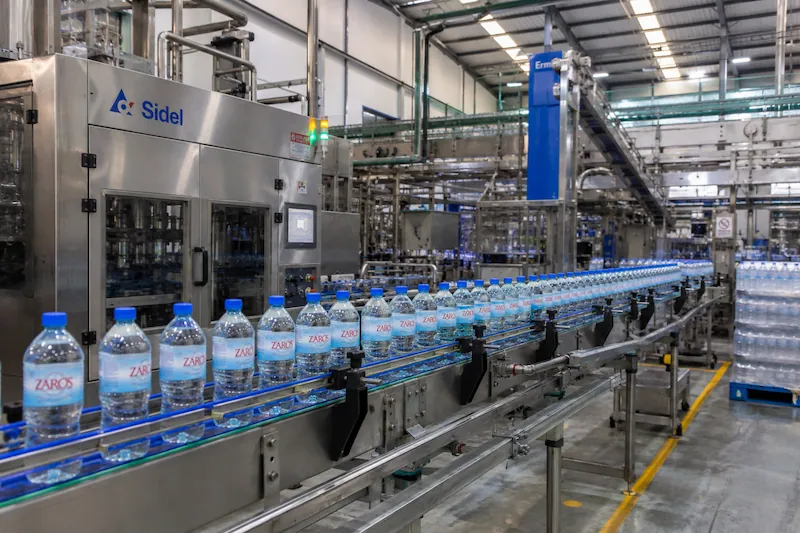
Comprehensive business blueprint for setting up a 2000 LPH BIS/ISI certified packaged drinking water unit, automated 20-liter jar packaging, and PET bottle bottling line.
Makhana Processing Business
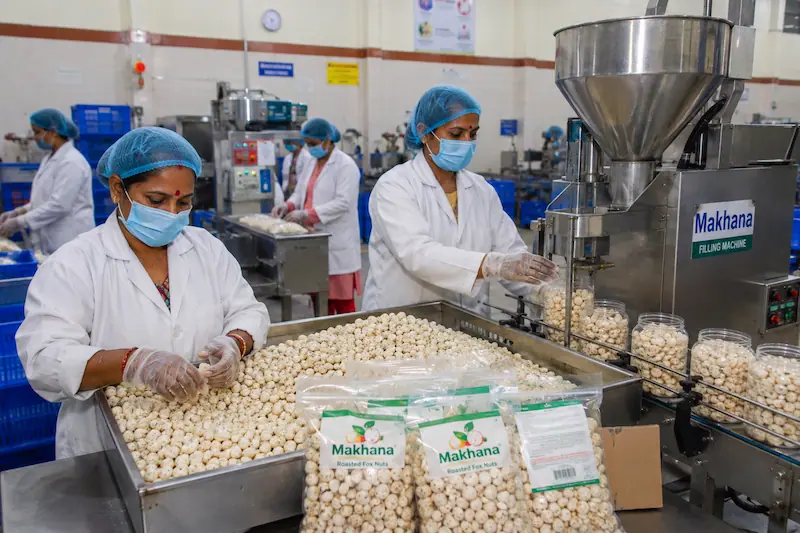
Start a makhana business at the scale that fits your capital, from a low-cost home-based roasted and packed model to a commercial processing unit with grading, roasting, flavouring and automated packing.
Notebook Manufacturing Business
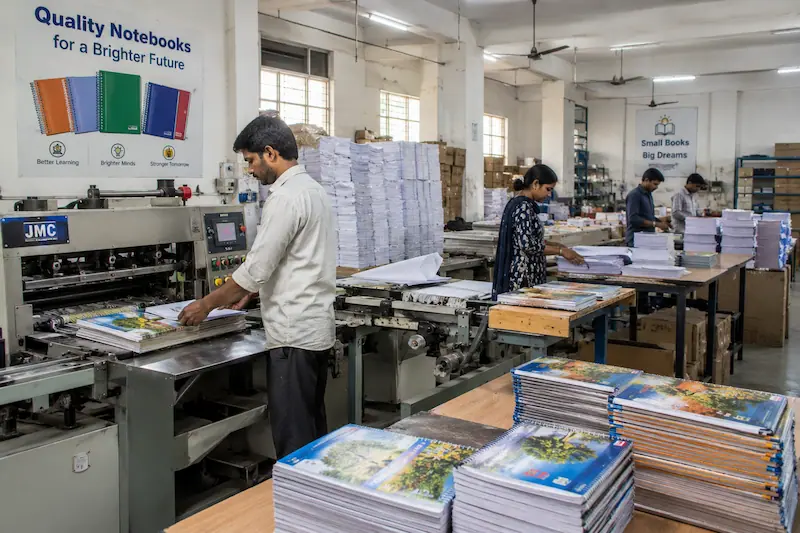
A scalable notebook manufacturing opportunity covering an asset-light micro start, small workshop production, semi-commercial manufacturing and organised commercial supply.
15. Data Verification & Methodology
This business profile was audited on 28 Aug 2026 with a data confidence score of 96%.
Equipment pricing and operational assumptions are cross-referenced with Indian industrial machinery suppliers, commercial lease indices, and official Ministry guidelines.
16. Frequently Asked Questions
Yes, a micro value-added spice business can start around this level if a suitable workspace is already available. The low-cost route is to buy cleaned whole spices, outsource grinding or use a small grinder, then blend, weigh and seal a limited range of products manually. The goal should be to validate repeat demand before buying larger machinery.
A realistic micro entry range is roughly ₹40,000 to ₹1 lakh when existing premises are available. A small dedicated operation with its own grinder, better handling and basic packing generally moves toward ₹1 lakh to ₹3 lakh. A larger semi-commercial setup can require ₹3 lakh to ₹8 lakh.
Current Indian supplier references show a 3 HP spice pulverizer around ₹38,000 with approximately 50 kg/hour stated capacity and a 5 HP machine around ₹59,000 with 50 to 60 kg/hour stated capacity. A 10 HP industrial masala grinder is currently listed around ₹4.45 lakh before GST with about 100 kg/hour stated capacity. Actual quotations vary by design, materials, motor, controls and accessories.
No. At micro scale, outsourcing grinding can be a rational choice if the processor can maintain recipe, batch traceability and quality control. Owning a grinder becomes more attractive when volume is high enough to justify the equipment, when turnaround time matters, or when controlling particle size and processing conditions creates a commercial advantage.
A micro food-processing operation may be possible from a suitable home premises where local requirements permit it. The operator should maintain proper hygiene, food-safe storage, pest control, raw-material segregation and applicable FSSAI compliance. Grinding dust and ventilation should also be considered before using a residential room.
Start with a limited number of products with clear local demand. Common starting products include chilli powder, turmeric, coriander and cumin, followed by one or two blended masalas that match local cooking habits. Launching too many SKUs increases inventory and working-capital pressure.
The requirement depends on motor size and supporting equipment. A current 10 HP industrial masala grinder listing states 415 V supply and approximately 9.5 kW power consumption. Smaller 3 HP and 5 HP machines need substantially less motor capacity. Final connected load should be calculated from the actual machine nameplates and additional equipment.
FSSAI states that every food business operator must be licensed or registered. Its current guidance says petty food manufacturers and small or cottage-scale food businesses up to ₹12 lakh annual turnover can use registration, while businesses above that threshold require a licence under the applicable category. The actual licensing category should be confirmed on FoSCoS based on turnover, production capacity and activity.
There is no single reliable net-margin figure. Commodity spice powders face strong price competition, while branded blended masalas can generate better contribution but also require packaging, marketing and distribution spending. Profit depends on raw-spice prices, formula, processing loss, pack size, channel margin and credit terms. Use actual local purchase and selling quotations to calculate contribution per kilogram.
Yes. Restaurants, caterers and food-service businesses can provide recurring demand if the taste, grind and batch quality remain consistent. Bulk packs can reduce packaging cost per kilogram, but buyers may negotiate on price and payment terms. Keep credit limits tight.
Yes. Start with a small number of products and build the brand around consistent taste, raw-material quality, clean processing and reliable availability. Retail packaging and labelling must meet applicable food regulations. A small brand should prove repeat sales before expanding into many flavours and pack sizes.
A qualifying micro food-processing business may be eligible for PMFME subject to the current scheme rules and applicant conditions. Eligible new manufacturing enterprises may also consider PMEGP. The revised PMEGP guidelines allow a maximum manufacturing project cost of ₹50 lakh for margin-money subsidy purposes, subject to scheme conditions. Neither programme should be treated as automatic approval or guaranteed cash.
A micro packing and small-batch operation can work in roughly 120 to 250 sq ft when raw-material stock is limited and some grinding is outsourced. A small processing unit generally benefits from around 250 to 700 sq ft. A commercial operation with separate cleaning, grinding, blending, packing and storage areas can require 1,000 sq ft to 5,000 sq ft or more depending on throughput and inventory.
Prove product demand and gross contribution before adding large machinery. Start with a small product range and outsourced or small-scale grinding, then add a commercial grinder, mixer and sifter as throughput rises. Automatic packaging should follow consistent retail volume. Investment in raw-material procurement, quality control and distribution can be more valuable than premature machinery purchases.
The business can scale from a one-person micro packing operation to a regional or national spice brand. Expansion routes include higher grinding capacity, additional blends, private-label manufacturing, institutional supply, distributor networks, modern retail, e-commerce and export. India exported 1,799,267 MT of spices and spice products in FY 2024-25, demonstrating the scale of the broader industry, but reaching large markets requires stronger quality systems, capital and distribution.